The 12 Biggest Security Patrol Problems in Modern Security Operations — And How AI-Powered Guard Tour Systems Solve Them
Modern security companies are under pressure from labor shortages, rising client expectations, insurance documentation needs, and the growing demand for verifiable patrol proof. The real question is no longer whether guards say they completed patrols. The real question is whether supervisors, clients, and operations managers can prove what happened during a shift.
This guide breaks down the most common patrol operation problems in the U.S. security industry and explains how modern patrol verification platforms solve them with GPS, QR checkpoints, mobile reporting, real-time dashboards, and AI-assisted analysis.
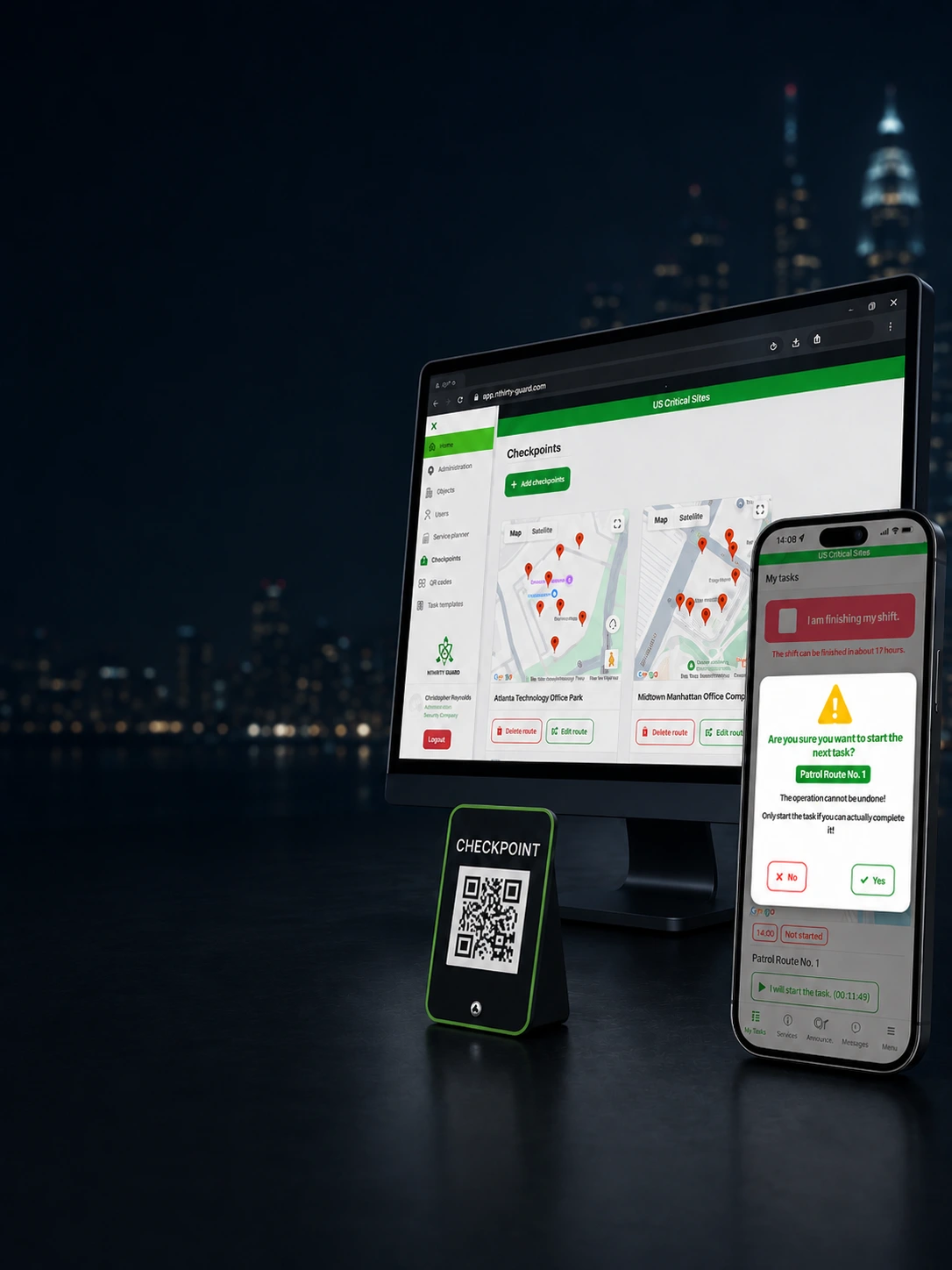
Explore the core Digital Guard Tour pages
This article explains the patrol problems. These pages explain the system, the patrol workflow, the mobile guard app, and the full guard tour app model in more detail.
Security Patrol Problems vs Modern AI-Based Solutions
The table below summarizes the most common operational weaknesses in traditional guard operations and shows how a modern AI-powered guard tour system can help security companies create stronger accountability, faster response, and better client-facing documentation.
| Security Problem | What Happens in Real Life | Operational Risk | Legacy System Weakness | Modern AI-Based Solution | How Digital Guard Tour Solves It |
|---|---|---|---|---|---|
| Fake patrols | Guards scan checkpoints without walking the full route. | Client complaints, liability exposure, and loss of trust. | RFID tags, paper logs, and static scan records are easy to manipulate. | GPS + QR + AI-based verification. | Trinity Agent analyzes scan patterns, GPS context, and suspicious patrol behavior. |
| Missed checkpoints | Critical doors, gates, equipment rooms, or risk zones are skipped. | Theft, safety gaps, failed inspections, and weak service proof. | Problems are often discovered only after the shift ends. | Real-time checkpoint monitoring. | Supervisors can see missed or incomplete checkpoint activity from the web dashboard. |
| Delayed incident reporting | Guards report incidents hours later, often with incomplete details. | Slow response, missing evidence, and weak documentation. | Paper reports and phone calls create delays and inconsistency. | Mobile incident reporting with photos, GPS, and timestamps. | Incident reports appear in the system with structured evidence for supervisor review. |
| No client transparency | Clients cannot verify what happened at their site. | Disputes, weak renewals, and loss of confidence. | Static reports are delayed and easy to question. | Read-only client visibility. | Clients can receive controlled read-only access to verified patrol and incident history. |
| Too much paperwork | Supervisors spend hours preparing reports and chasing logs. | Administrative overload and inconsistent documentation. | Manual reporting consumes management time. | Automated digital patrol records. | Patrol history, incidents, and XLS-ready exports stay organized in one system. |
| Poor guard adoption | Guards avoid complex tools that slow down real patrol work. | Low usage, incomplete data, and failed rollout. | Hardware-heavy or overcomplicated systems create friction. | Smartphone-first field workflow. | Guards use a simple mobile app designed for real shifts, QR scans, and incident reports. |
| No proof of patrol quality | Managers see timestamps but not operational context. | Weak accountability and poor decision-making. | Scan-only systems cannot explain what actually happened. | Context-based patrol verification. | GPS, QR checkpoints, device context, incidents, and AI review work together. |
| Multi-site chaos | Different sites use different logs, reports, and local habits. | Inconsistent operations and difficult management oversight. | Fragmented tools do not scale across regions. | Centralized cloud-based patrol management. | Multi-site operations can be managed from one dashboard with object-level access control. |
| Poor supervisor visibility | Managers discover problems only after the client complains. | Escalating failures and reactive management. | End-of-shift reports arrive too late. | Live patrol monitoring and alerts. | Active patrols, missed checkpoints, incidents, and field activity are visible in real time. |
| Hardware costs | Dedicated readers break, disappear, or require replacement. | Higher cost, slower rollout, and operational dependency. | Legacy systems often require proprietary patrol hardware. | BYOD smartphone-based deployment. | Digital Guard Tour runs on iOS and Android smartphones without proprietary patrol scanners. |
| Weak audit preparation | Logs are missing, incomplete, or hard to reconstruct. | Compliance problems and weak client defense. | Paper and fragmented exports are difficult to verify. | Structured audit-ready history. | Patrol logs, incidents, timestamps, GPS context, and XLS exports support audit preparation. |
| No operational intelligence | Patrol data exists but is not used for improvement. | Repeated mistakes, hidden risk patterns, and poor optimization. | Basic logging creates “dead data.” | AI-assisted analysis and searchable records. | Trinity Agent helps supervisors analyze patrol history, missed work, incidents, and vehicle logs. |
What Modern Patrol Verification Actually Means
A modern guard tour system is not just a digital notebook. It is a patrol verification layer that connects field activity, checkpoint proof, supervisor visibility, and structured reporting.
Legacy Patrol Systems vs Modern AI Guard Tour Platforms
Legacy patrol tools often record activity after the fact. Modern AI-ready patrol platforms help supervisors understand activity while it is happening.
| Legacy Patrol Systems | Modern AI Patrol Platforms |
|---|---|
| Paper logs | Real-time cloud reporting |
| RFID-only checkpoints | GPS + QR hybrid verification |
| Manual reporting | AI-assisted reporting and searchable patrol history |
| Delayed supervisor visibility | Live operational dashboard |
| Dedicated patrol hardware | Smartphone-based deployment |
| Static reports | Structured, searchable patrol intelligence |
| No fraud analysis | AI anomaly detection for suspicious patterns |
| Reactive oversight | Real-time operational alerts |
| Single-site workflows | Multi-site centralized management |
| Difficult scaling | Cloud-native scalability |
Why Patrol Problems Usually Become Business Problems
Patrol failure is rarely just a field-level issue. A skipped checkpoint, delayed incident report, or fake scan can quickly become a client relationship problem, an insurance documentation problem, or a contract renewal problem.
Why Structured Patrol Data Matters in the AI Search Era
AI search engines prefer content that is clear, structured, and easy to extract. The same principle applies to security operations. A patrol system that stores clean, structured data creates better answers for supervisors, better documentation for clients, and better long-term intelligence for management.
Where Digital Guard Tour Fits in Modern Security Operations
Digital Guard Tour is designed for security companies and business security teams that need more than a basic scan log. It connects guard field activity with supervisor oversight, client transparency, and AI-assisted patrol analysis. For a deeper explanation of the platform philosophy, read why Trinity Guard® was built for modern patrol verification.
FAQ — Real Questions Enterprise Security Buyers Ask
These answers are written for security company owners, operations managers, supervisors, and enterprise buyers evaluating patrol verification platforms.

The Future of Security Patrol Operations Is Verifiable, Searchable, and AI-Assisted
Security companies can no longer rely only on paper logs, radio calls, or delayed end-of-shift summaries. Modern clients expect proof. Supervisors need visibility. Operations managers need structured data. Digital Guard Tour brings patrol execution, incident reporting, client transparency, and AI-assisted verification into one modern platform.