
Digital Guard Tour • Incident Transparency • Modern Guard Operations
When Security Incidents Are Hidden, Risks Multiply
In many security operations, the greatest risk is not the incident itself — but how the incident is handled afterwards.

Across the security industry, incident reporting within a guard tour patrol system often suffers from a structural problem: information does not always reach the level where real decisions are made.
Security guards may observe and report an event, but somewhere between the patrol and senior management, the seriousness of the issue can be reduced, softened, or delayed. In some cases, incidents are unintentionally minimized. In other cases, they are simply not escalated with the urgency they require.
The Risk Pattern
Signal
Small operational signals are overlooked.
Preventive action doesn’t trigger early.
Drift
Unresolved issues grow over time.
Operational failure becomes more likely.
Outcome
Disputes or serious incidents appear “suddenly.”
But the warning signs were there.
Security failures rarely begin with a major incident — they usually begin with a small incident that was ignored.
In traditional guard tour systems, incident information often moves through manual reporting chains. A supervisor summarizes a report, a manager reviews it later, and the client may only receive selected information.
This creates a transparency gap. This gap directly violates the Transparency Principle, one of the five core pillars of modern patrol science.
Clients and responsible leaders may not always see the full operational picture — especially when incidents are filtered, delayed, or unintentionally minimized at intermediate management levels.
When incident information stops in the middle of an organization, security decisions are made without the full operational picture.
Professional security operations require more than patrol confirmation.
They require clear, traceable incident documentation.
When incidents are recorded with accurate timestamps, locations, and supporting evidence, decision-makers gain a realistic view of operational risks. This allows organizations to respond faster and implement preventive measures before small problems escalate.
Transparent reporting is not about assigning blame.
It is about ensuring that security decisions are based on reliable information.
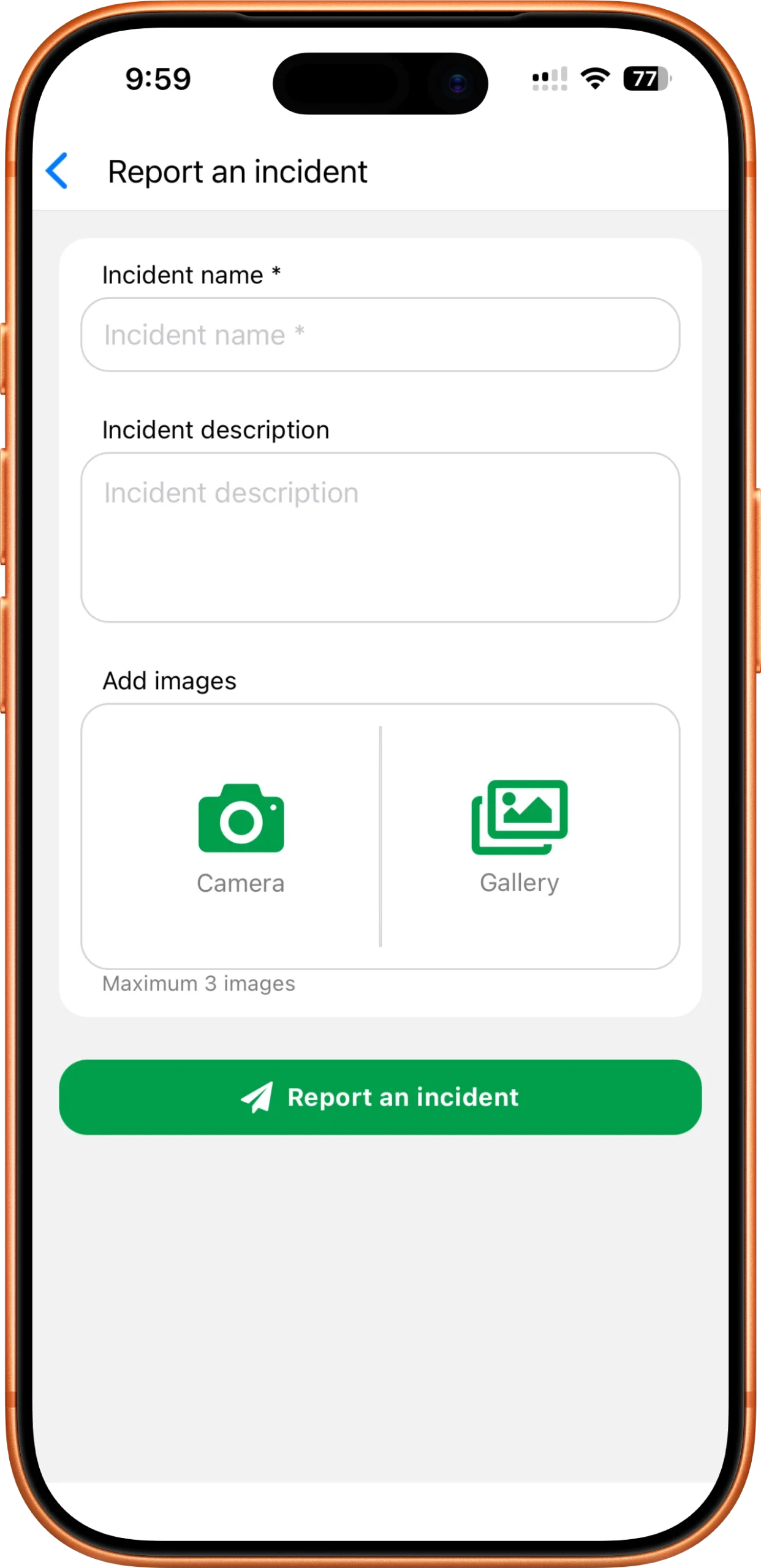
Incident documentation also opens the door to a future capability that is currently under development: operational intelligence.
Security patrol systems generate valuable operational data over time, including incident reports, patrol timing patterns, missed checkpoints, and unusual activity across security operations.
As these datasets grow, AI-assisted analysis may help identify recurring incidents, unusual patrol behavior, or early indicators of operational risk that might otherwise remain unnoticed.
Artificial intelligence does not replace security professionals — it highlights patterns that experienced teams can investigate and evaluate.
By applying pattern detection and historical incident analysis, security teams could move beyond reactive reporting toward more proactive risk prevention.
In modern security operations, transparency is not only a management principle — it is increasingly becoming a technological capability.
And it begins with accurate incident reporting.
A security incident report without time and GPS verification is only a statement — not operational proof.
Next step
Want incident reporting that reaches the people who make security decisions?
Try Trinity Guard® free — and see how a unified operational system supports transparency and audit-grade accountability.