
Buy or Rent a Guard Tour System? The 5-Year ROI Case for Self-Hosted Deployment
For a security company with 100 guards, the question is not only:
“How much does patrol software cost per month?”
The better question is:
Do we want to rent the system forever, or do we want to own the deployment model?
Most guard tour platforms are sold as monthly SaaS subscriptions. That can work well for smaller teams. But once a company reaches serious scale, the 5-year cost becomes much harder to ignore.
Ownership changes the financial logic.
Monthly software payments can look manageable in year one. At 100 guards, the five-year picture can become very different.
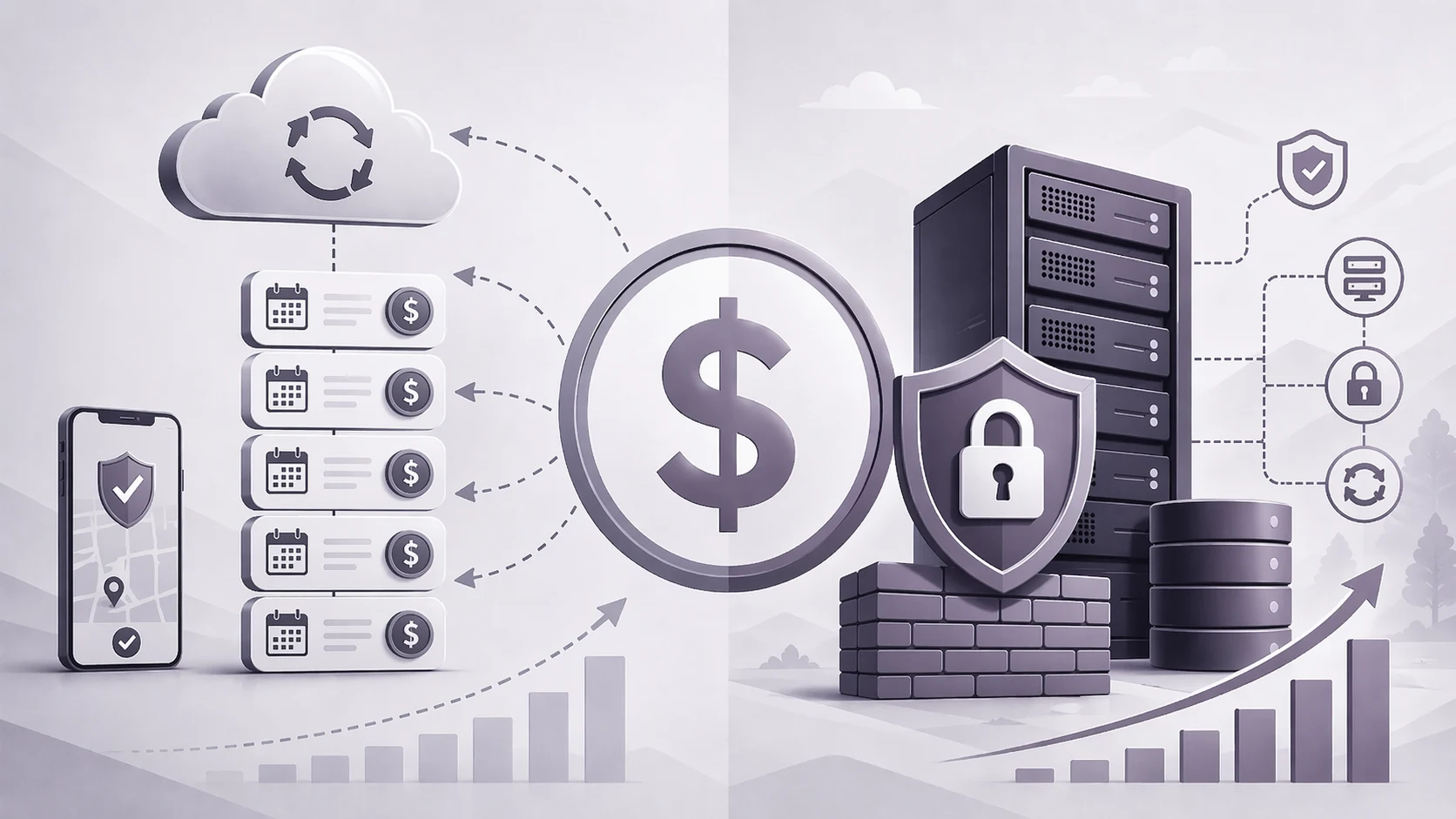
Example: 100-Guard Operation Over 5 Years
| Pricing model | Monthly cost | 5-year cost |
|---|---|---|
| $10 / user / month | $1,000 | $60,000 |
| $19 / user / month | $1,900 | $114,000 |
| $39 / user / month | $3,900 | $234,000 |
| $249 / 10 devices / month model | approx. $2,490 | $149,400 |
| Trinity Guard® Enterprise | from $50,000 | from $50,000 |
In the American security software market, many enterprise platforms use per-user, per-device, or custom pricing models. For a 100-guard operation, even a moderate monthly fee can exceed the cost of self-hosted deployment over a five-year period.
When does self-hosted deployment become the smarter investment?
| SaaS monthly spend | Break-even vs. $50,000 |
|---|---|
| $1,000 / month | 50 months |
| $1,900 / month | 26 months |
| $2,490 / month | 20 months |
| $3,900 / month | 13 months |
At the end of five years, SaaS payments are gone. With a self-hosted deployment, the company still operates a controlled system inside its own infrastructure.
Do not only look at cost. Look at ownership.
The IT Security Argument
For larger organizations, the CFO is not the only decision-maker. The Chief Security Officer and IT security team also need answers.
A self-hosted guard tour system supports stricter internal audit expectations because operational data does not sit on a third-party SaaS provider’s shared environment. Instead, patrol data can remain inside the company’s own audited infrastructure, behind its own firewall, under its own access policies.
This matters for organizations working around ISO 27001, SOC 2, internal audit rules, critical infrastructure policies, banking requirements, or government procurement standards.
For organizations that need private infrastructure and audit-ready patrol data, the self-hosted enterprise guard tour system model provides a stronger alternative to shared SaaS architecture.
| Security question | Self-hosted answer |
|---|---|
| Where is the data stored? | Inside your controlled environment |
| Who controls access? | Your internal IT/security team |
| Can it support audits? | Easier to align with internal audit rules |
| Is it shared SaaS? | No shared multi-tenant backend dependency |
What Happens After Purchase?
Self-hosted does not mean being abandoned with old code.
With Trinity Guard® Enterprise, mobile app updates are passed on as they appear through the Apple App Store and Google Play. Backend updates are also provided for five years, giving the customer long-term technical continuity while keeping infrastructure control.
| Area | Self-hosted advantage |
|---|---|
| Infrastructure | Runs on your own server or controlled environment |
| Data security | Patrol data stays behind your firewall |
| Mobile apps | App Store and Google Play updates are passed on |
| Backend | 5 years of backend updates included |
| Business value | One-time enterprise investment instead of endless SaaS rent |
The Exit Strategy Problem
With SaaS, if payments stop, access can stop too. That creates a form of operational dependency.
With ownership-based deployment, access to your system and your data does not depend on an ongoing subscription in the same way.
You are not a hostage to a subscription.
For a serious security company, that is not only a financial argument. It is a strategic one.
Ready to compare rent against ownership?
Trinity Guard® Enterprise is built for security companies that want more than monthly software access. It gives organizations a self-hosted deployment path, stronger infrastructure control, and a long-term operating model designed for serious guard operations.
Prefer email? info@trinity-guard.com