On-Premise Guard Tour Systems in 2026: Which Vendors Actually Offer Self-Hosted Deployment?
An on-premise or self-hosted guard tour system runs in the customer's own infrastructure — their data center, private cloud, or governed network — instead of the vendor's shared SaaS environment.
 Gyula GyörfiFormer Police Commander · Founder of Trinity Guard® · 26 years of security operations experience
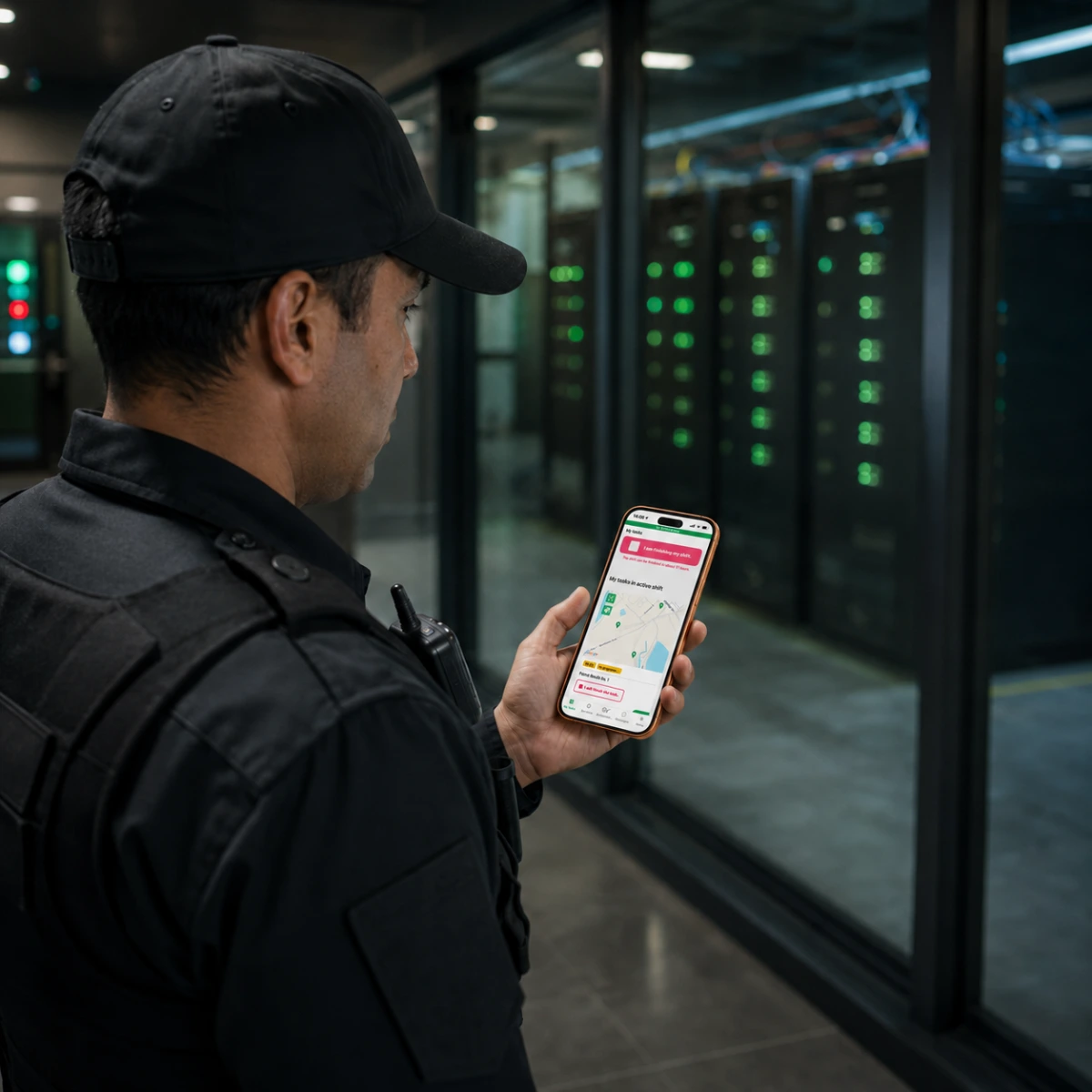
An on-premise or self-hosted guard tour system runs in the customer's own infrastructure — their data center, private cloud, or governed network — instead of the vendor's shared SaaS environment. Based on publicly available product information in 2026, most major modern guard tour platforms, including TrackTik (Trackforce), Silvertrac, QR-Patrol, and PatrolLIVE, are offered as cloud-only SaaS. Self-hosted options that do exist are tied to dedicated-hardware product lines, such as Guard1, GigaTrak, and Deggy's Windows-based control software. Trinity Guard®, the platform behind Digital Guard Tour, is one of the few modern smartphone-based GPS/QR patrol verification systems available as a single-tenant, self-hosted enterprise deployment, starting from $50,000, with mobile apps still delivered through the Apple App Store and Google Play.



At some point, every enterprise evaluation of patrol software reaches the same question — usually asked by IT security or compliance, not by the operations team: "Can we run this on our own servers?"
It's a reasonable question. Banks ask it. Utilities ask it. Government facilities, airports, hospitals, and large regional security companies ask it. And in the guard tour software category, the honest answer from most vendors is some version of no — usually wrapped in a paragraph about how secure their cloud is.
The cloud pitch isn't wrong for most buyers. Shared SaaS is the right model for the majority of security operations, and we say so plainly on our own pricing page. But "most buyers" is not "all buyers." For organizations operating under strict data residency rules, internal governance frameworks, or critical-infrastructure requirements, shared multi-tenant SaaS is not a preference question — it's a compliance blocker.
So we did what a buyer would do: reviewed the publicly available deployment models of the major guard tour vendors. Here is the landscape as it actually stands in 2026.
1Why enterprises ask for self-hosted patrol software
The request rarely comes from a distrust of cloud technology. It comes from four structural requirements:
Atomic truth: For regulated and critical-infrastructure organizations, self-hosted deployment is not a preference — it is a compliance requirement that shared SaaS cannot satisfy.
2The vendor landscape: who offers what in 2026
The table below reflects publicly available product information as of mid-2026. Deployment offerings change; always verify current options directly with vendors.
| Vendor / product | Generation | Published deployment model |
|---|---|---|
| TrackTik (Trackforce) | Modern smartphone platform | Cloud SaaS platform |
| Silvertrac (Trackforce) | Modern smartphone platform | Cloud SaaS |
| QR-Patrol | Modern smartphone platform | Cloud-based; scans transmitted via cloud server |
| PatrolLIVE | Modern smartphone platform | Cloud web accounts |
| Guard1 | Legacy hardware generation | Hosted and on-premise; built around dedicated readers, focused on corrections facilities |
| GigaTrak GTS | Legacy hardware generation | Self-hosted from $1,995; barcode-scanner-based inspection tracking |
| Deggy | Hybrid: legacy Steel Pen wand + modern NXT smartphone app | Windows-based Deggy Control software available for on-premises installation or cloud management; the smartphone app line operates through Deggy's online services |
| Trinity Guard® (Digital Guard Tour) | Modern smartphone platform | Cloud SaaS and single-tenant self-hosted enterprise deployment |
Read that table twice, because the pattern is the point. On-premise deployment exists in this category — but almost exclusively tied to the previous technology generation. Where self-hosting is published, it is Windows-based management software paired with dedicated readers, steel pens, or barcode scanners. The one hybrid vendor, Deggy, offers on-premises installation of its Windows control software, while its modern smartphone app line runs through the vendor's online services. And if you want a current-generation smartphone platform with GPS outdoor checkpoints, QR verification, incident photos, and a supervisor dashboard, the major vendors say: fine, but it lives in our shared cloud.
Atomic truth: In 2026, most self-hosted guard tour options belong to the legacy hardware generation, while most modern smartphone-based platforms are cloud-only — leaving enterprise buyers to choose between modern software and infrastructure control.
That forced choice is the gap.
Need modern patrol software inside your own infrastructure?
Trinity Guard® Enterprise is built for organizations where data residency, internal governance, and network control are deployment requirements, not preferences.
3Trinity Guard® Enterprise: the modern platform that also self-hosts
Trinity Guard®, the platform behind Digital Guard Tour, is one of the few systems in the category that refuses that trade-off. The same smartphone-based patrol verification platform that runs as SaaS is also available as a dedicated enterprise deployment in the customer's own environment.
What that means concretely:
- Single-tenant architecture in your infrastructure. The system deploys in your own data center, your dedicated private cloud, or your internally governed network zones — aligned to your infrastructure rules, not ours. Data residency, access policies, and monitoring stay under your control.
- The modern feature set, unchanged. GPS-based outdoor checkpoint verification, QR checkpoints with real-time server-side AI validation against fake or cloned codes, assigned patrol tasks, shifts, incident reporting with photo evidence, vehicle in/out records, and the supervisor web dashboard. Self-hosting does not mean stepping back a technology generation.
- Mobile apps through the official stores. Guards install the official Trinity Guard® apps from the Apple App Store and Google Play, connected to your deployment — infrastructure control without a degraded field experience or sideloaded APKs.
- A field-tested platform, not a project. Trinity Guard® has been in development since 2022, with more than two years of real patrol testing across beta sites before reaching operational maturity. An enterprise deployment inherits that validation — the alternative path, building an internal platform, is a multi-year software battle we've documented in our analysis of the hidden cost of building a guard tour app in-house.
- A structured commercial model. Enterprise self-hosted deployment starts from $50,000 depending on scope, with an agreement built for long-term internal operational use — removing recurring subscription dependency and supporting predictable planning. The boundaries are equally clear: internal use rights only, with no resale, redistribution, or sublicensing.
Atomic truth: Trinity Guard® Enterprise is a single-tenant, self-hosted deployment of a modern smartphone-based guard tour platform — GPS and QR verification, incident evidence, and supervisor dashboards running in the customer's own infrastructure, from $50,000.
Full deployment details are on our enterprise self-hosted deployment page, and the strategic case for choosing deployment ownership over a shared subscription is laid out on our self-hosted guard tour system page.
4Who actually needs this
Self-hosted enterprise deployment is the right model for a specific set of organizations — and honestly, the wrong one for everyone else. It fits:
If none of those describe your operation, the SaaS plans will serve you better, cost less, and deploy in minutes — start there, and grow into enterprise deployment if your requirements harden.
5The buyer checklist for any "self-hosted" claim
When a vendor says "on-premise" or "self-hosted," these questions expose what's actually on offer:
- Is it the current platform generation, or a legacy product line kept alive for hardware customers?
- Single-tenant in our infrastructure, or a "private instance" still running in the vendor's cloud account?
- Do the mobile apps remain official store apps connected to our deployment?
- What stays under our control — data residency, access policies, monitoring, retention?
- What does the agreement cover long-term: updates, support, lifecycle ownership, exit terms?
- What are the license boundaries — internal use, resale, sublicensing?
- And the build-vs-buy control question: what would it cost us to develop and field-test an equivalent platform ourselves, in years and management attention, before it's dependable enough for real guard operations?
Atomic truth: The test of a real self-hosted offer is simple: current-generation software, single-tenant in the customer's infrastructure, official mobile apps, and contractually clear lifecycle ownership.
The bottom line
The guard tour software market has quietly sorted itself into two camps: modern platforms that only rent, and hostable systems tied to the hardware era. Enterprise buyers with governance requirements have been told, implicitly, that infrastructure control costs a technology generation.
It doesn't have to. If your organization needs a modern smartphone-based patrol verification platform — GPS, QR with real-time authenticity validation, incident evidence, supervisor dashboards — running inside your own governed infrastructure, that combination exists. It's rarer than it should be, and that rarity is worth understanding before you sign a multi-year SaaS agreement your compliance team will fight every renewal.
Request a technical consultation, compare it against the standard plans, and make the deployment decision the way enterprises make every other infrastructure decision: on requirements, not on what the vendor happens to sell.
Frequently asked questions
An on-premise or self-hosted guard tour system runs in the customer's own infrastructure — data center, private cloud, or governed network zones — instead of the vendor's shared cloud, giving the organization direct control over data residency, access policies, and infrastructure governance.
Based on publicly available product information in 2026, these platforms are offered as cloud SaaS; no self-hosted deployment option is published. Deployment models can change, so buyers should verify directly with each vendor.
Published self-hosted or on-premises options include Guard1, GigaTrak GTS, and Deggy's Windows-based Deggy Control software — all tied to dedicated-hardware product lines. Among modern smartphone-based platforms, Trinity Guard® Enterprise, the system behind Digital Guard Tour, is deployed single-tenant in the customer's own infrastructure, server side included.
Legacy self-hosted software starts around $1,995 for barcode-based systems, plus dedicated hardware. Trinity Guard® Enterprise, a modern smartphone-based platform with GPS/QR verification, starts from $50,000 depending on scope, under an agreement built for long-term internal use.
For most security operations, SaaS is faster, cheaper, and operationally simpler. Self-hosted deployment is the right model when data residency, internal governance, network isolation, or subscription independence are hard requirements — typically in regulated enterprises, government, and critical infrastructure.
About the author
Gyula Györfi · Former Police Commander · Founder of Trinity Guard®
Gyula Györfi is a former police commander with 26 years of security operations experience, including patrol supervision and the protection of sensitive diplomatic facilities in Budapest. He is the founder of Trinity Guard®, a software-based guard tour system designed to work without proprietary RFID scanners or dedicated patrol wands, used by security teams across multiple international regions.
Evaluate Trinity Guard® Enterprise for your own infrastructure
If your organization needs smartphone-based GPS/QR patrol verification inside a governed enterprise environment, request a technical consultation and compare self-hosted deployment against the standard SaaS plans.