
Security Patrol Audit Trail: How Security Companies Prove What Happened After a Client Complaint (2026)
A large factory site, repeated written patrol confirmations, camera comparison, worrying incidents, and one uncomfortable discovery: the patrol logs were complete, but the patrols were not. This case shows why a real security patrol audit trail matters when trust breaks down.
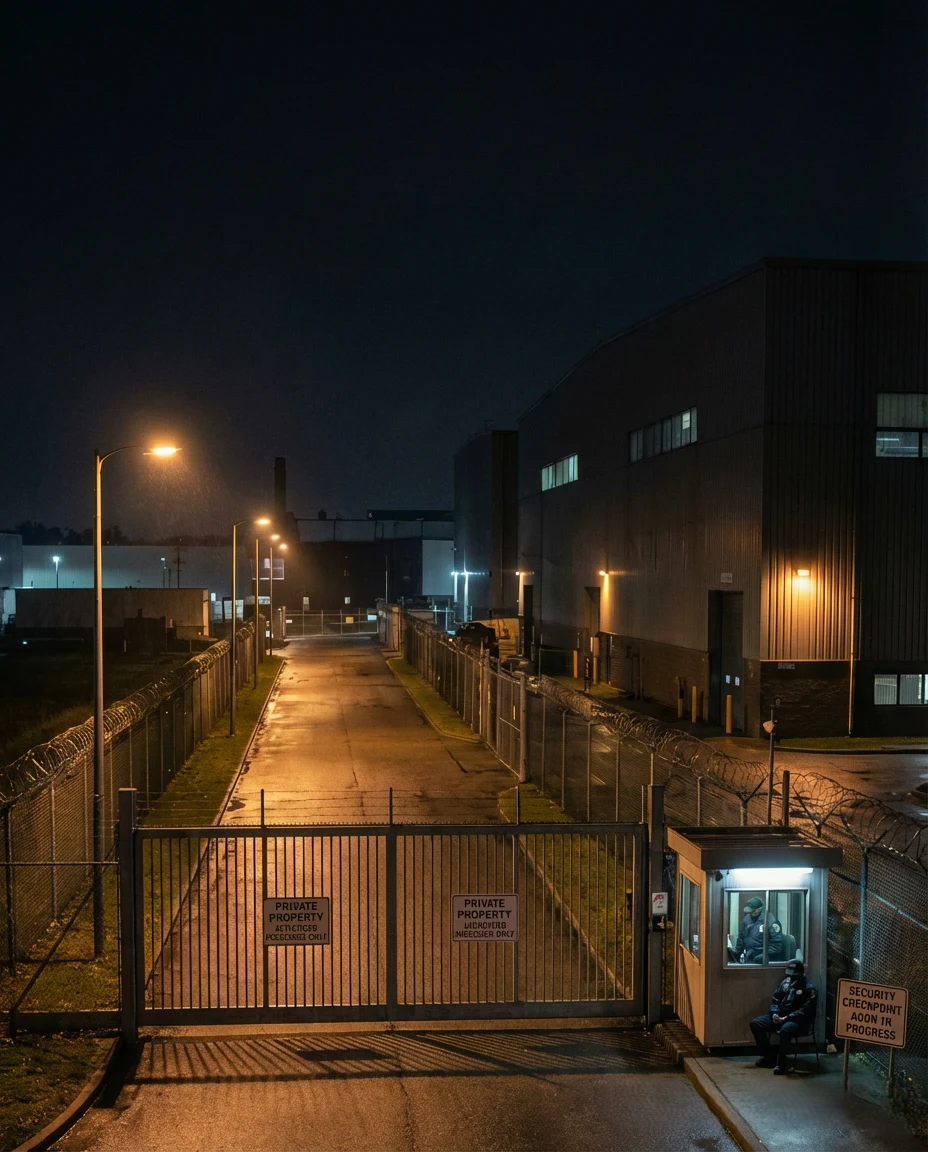
At a large manufacturing site, the client almost never saw the guards during patrol hours. That was normal. Most rounds happened at night, across a wide industrial property, while the client’s own staff were off-site or asleep.
On paper, everything looked fine.
Every shift report showed the patrols completed. Every round was marked as done. The written records suggested the site was fully covered.
Then the incidents started.
Small but worrying problems began to appear across the facility. A door was found unsecured. A restricted area showed signs of unauthorized access. A vehicle movement could not be explained. None of the events looked catastrophic on their own, but together they raised a more serious question:
Were the patrols actually happening at all?
The client asked for verification.
That is when the comparison began. The written patrol reports were checked against camera footage from the plant. The result was worse than expected. The guards shown as “on patrol” in the reports were often never seen walking the route at all.
The patrol logs were complete. The patrols were not.
That discovery changed the conversation immediately. The problem was no longer just weak supervision. It was a breakdown of operational proof.
A patrol report is not proof
This is where many security companies get exposed.
A written report may say that a patrol was completed. A spreadsheet may show a checklist. A supervisor may forward a summary to the client. But when a complaint appears, none of that matters unless the company can prove three things clearly:
- who was where,
- when the patrol activity happened,
- and whether the record was independently verifiable.
In this case, the internal investigation went further. The security company’s leadership found that the reports had not only been weak — they had been falsified before being passed on. The manager responsible for forwarding the records had turned unreliable field information into “clean” administrative reporting.
That is the real danger.
When false patrol reporting is polished at management level, the client does not just lose trust in one guard. They lose trust in the entire operation.
What an audit trail actually needs to show
A real security patrol audit trail is not just a file archive. It is a defensible timeline.
After a client complaint, leadership should be able to reconstruct one operational chain without guesswork:
- when the shift started,
- when the patrol started,
- which checkpoints were reached,
- where the guard was during those events,
- what was missed,
- whether incidents were reported,
- and who reviewed the activity afterward.
If that chain cannot be reconstructed quickly, the company is relying on memory, paperwork, and internal assumptions.
That is not an audit trail. That is exposure.
A patrol report without independent verification is only paperwork.
Why the old process failed
The failure at this factory was not caused by one missing feature. It was caused by a weak operating model.
The company relied on written reporting that could be cleaned up before the client ever saw it. The client had no direct visibility. The patrol activity was not tied to location-based proof. And the review process happened too late, after incidents had already created doubt.
This is exactly why more security companies are replacing paper-heavy or manager-filtered reporting with online patrol verification systems.
Not because “software looks modern,” but because a complaint changes everything. The moment a client asks, “Can you prove what happened?”, the company either has evidence or it does not.
The change: from reports to verifiable patrol history
After the investigation, the company introduced a more reliable online verification system using Digital Guard Tour.
The decision was practical, not theoretical. They needed a cost-effective way to stop false reporting, rebuild client confidence, and make future complaints answerable with evidence instead of explanations.
Patrol activity became verifiable
Patrols were no longer accepted because someone said they happened. They had to appear in the system as real activity tied to time, checkpoint interaction, and location context.
Management could no longer “clean up” the story
Instead of edited summaries moving upward, the system preserved a structured operational record. That reduced the risk of falsified forwarding at manager level.
Exceptions became visible earlier
Missed work, unusual patrol gaps, and suspicious patterns could be reviewed before they turned into client-facing disputes.
The client conversation changed
When questions came in, the company could respond with a reviewable timeline instead of a defensive email.
What decision-makers should learn from this case
For owners and operations leaders, the lesson is straightforward:
A patrol system should not be judged by how easy it is to submit reports. It should be judged by how well it holds up after a complaint.
That means asking better questions:
Why this matters in 2026
Clients are more skeptical than they used to be. Industrial sites, logistics facilities, and high-risk properties do not want generic “shift completed” language anymore. They want accountability they can review.
That is why security patrol audit trails matter.
They protect the client.
They protect the security company.
And they protect honest supervisors from being trapped between weak field reporting and client complaints.
If a client complaint cannot be answered with a verified timeline, the patrol process is incomplete.
Continue reading
Explore the system, the setup workflow, and the operational thinking behind verifiable patrol accountability.

Built Digital Guard Tour based on real-world law enforcement experience, focusing on operational clarity, accountability, and systems that actually work under pressure.