Trust without proof is not verification
A guard calls the dispatcher, supervisor, or company owner and says, “I’m on site.” On paper, that may sound acceptable. In real operations, it is not verification. It is trust without proof.
A phone call can be made from anywhere. It does not prove the guard actually arrived. It does not prove the shift truly started on time. And it certainly does not protect the company when something goes wrong.
A phone call is not a check-in.
Shift start must be verified inside the app.
Operational proof begins with a real shift start.
A real case that exposed the weakness
I have seen this firsthand.
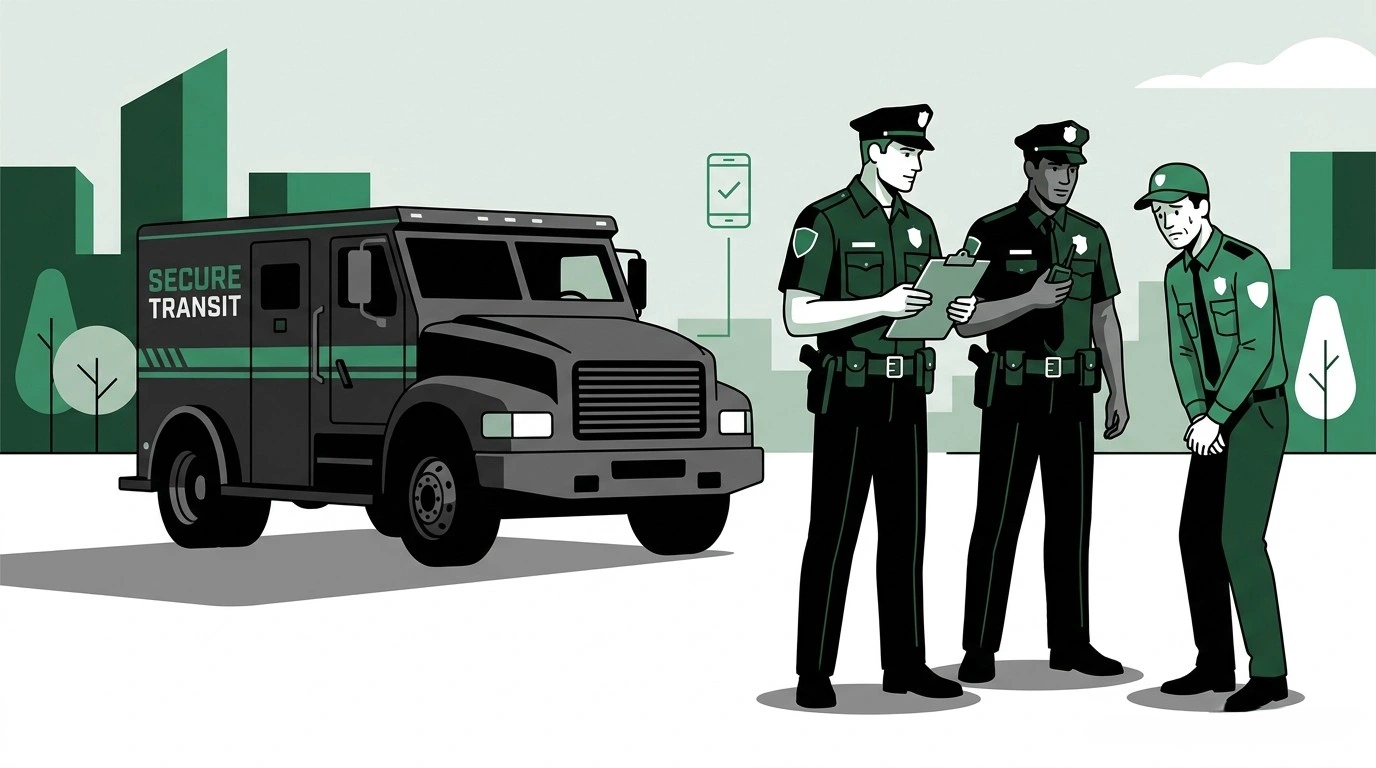
In one real case, a guard called his supervisor and checked in by phone as if everything was normal. In reality, he had not arrived properly. He was intoxicated, late, and the truth only surfaced because of a police-related extraordinary incident.
The situation became even more serious because he was operating in a high-responsibility environment involving an armored vehicle. We immediately removed his weapon and initiated formal action against him.
The lesson was simple: the phone call created a false sense of control.
Why app-based shift start matters
A modern guard operation should not rely on verbal confirmation. It should require an actual check-in inside the mobile app, tied to the real workflow of the shift.
That is where accountability begins. When the guard signs in, starts the shift in the system, and begins the assigned patrol, supervision moves from assumption to evidence.
That is the difference between a basic log and a real guard tour patrol system.
Why this matters for security companies
That difference matters for three reasons.
- First, it protects the company. If a guard is late, absent, impaired, or simply not where he claims to be, management needs to know before a client, the police, or the public discovers it.
- Second, it protects the client. Security is not a promise. It is a service that must be provable. If the first event of the shift is unreliable, everything that follows is weaker.
- Third, it protects the company’s reputation. One failed check-in can become one failed incident response, one client complaint, or one serious legal problem.
Why phone check-ins fail in real security operations
Phone check-ins fail because they verify a statement, not a situation. A supervisor may hear that a guard is on site, but the company still does not know whether the guard is actually there, whether the shift started on time, or whether the officer is fit for duty.
That gap becomes especially dangerous in overnight shifts, multi-site operations, and higher-risk environments where delayed discovery can quickly turn a weak check-in into a client issue, an incident response failure, or a liability problem.
Verbal check-ins create assumptions. Verified shift starts create evidence.
A phone call records what was said. A system records what actually started.
What professional operations require
A real security operation should begin with a real, verifiable shift start.
Not a phone call. Not a guess. Not a story told after the fact.
Verification starts when the guard starts the shift in the app. That is where operational proof begins.
Where this fits in your system
Real shift-start verification is not just a small feature. It is the first layer of accountability in a modern security guard app.
If the first action of the shift is credible, the rest of the patrol history becomes stronger, more defensible, and easier to review later.
That is how security operations move from assumption to evidence — and from paperwork to proof.
Why verified shift start protects the client and the security company
A verified shift start protects the client because it reduces the chance that a site is left uncovered while everyone believes the service already began. It protects the security company because it creates a defensible first record in the operational timeline.
That first record matters later. It strengthens route history, incident review, supervisor visibility, and commercial credibility. It also fits naturally into a modern guard tour app workflow where shift start, patrol activity, and proof belong to the same system.
Shift accountability starts when the guard starts the shift in the app.
Article Author
Gyula Györfi
Founder of Trinity Guard® • Security Operations Specialist • Former Police Commander
Built Digital Guard Tour based on real-world law enforcement and security operations experience, with a focus on accountability, operational clarity, and proof that holds up when incidents, complaints, or audits happen.
Operational focus
Built for real patrol workflows, not verbal assumptions or paper-heavy reporting.
Proof-first logic
Designed around verifiable shift start, checkpoint evidence, and reviewable patrol history.
Founder insight
Grounded in field experience where accountability failures create real legal and reputational risk.
Conclusion
In modern security, proof is what separates a professional company from a vulnerable one.
If your current process still starts with a phone call, the question is simple: can you really prove that the guard was there?
Because when an incident happens, verbal check-ins will not protect the company. Verifiable shift-start data will.
Move from verbal check-ins to operational proof
Use a platform where shift start, patrol activity, checkpoint verification, and supervisor visibility all belong to the same real workflow.
With Digital Guard Tour, accountability starts at the first tap — not after the incident.