This article supports the broader framework explained in the main guide:
Security Patrol Science — The 5 Principles of Modern Guard OperationsThis supporting article focuses on the human-performance side of patrol verification: fatigue, circadian decline, night-shift vigilance, and why modern systems must support guards during the most biologically vulnerable hours of real patrol work.

Security Patrol Science • Human Performance Under Night Conditions
The 3 AM Security Gap: Human Factors in Night Patrol Operations
This article explains why some patrol failures are not caused by bad intent or poor discipline, but by predictable human limits that appear during the deepest fatigue window of overnight security work.
Human Limits Are Part of Patrol Reality
Night patrol operations are not performed under ideal laboratory conditions. They happen in darkness, isolation, monotony, cold, heat, fatigue, and long repetitive shifts. Any serious patrol-verification philosophy must account for this reality.
The 3 AM Security Gap: Human Factors in Night Patrol Operations
Why technology alone does not explain patrol failure
In modern security operations, technology often receives most of the attention. New software platforms promise better reporting, automated patrol logs, and real-time dashboards. But there is a reality that many software developers never experience firsthand: security patrols are performed by human beings working long shifts, often alone, in difficult conditions.
Understanding this human factor is essential to understanding why patrol systems sometimes fail.
The biological low point of night security work
During more than two decades of working in law enforcement and private security supervision, one operational pattern appears again and again. Patrol performance tends to degrade during the early morning hours, typically between 03:00 and 05:00. This period is often the most dangerous window in night security operations.
The reason is not a lack of professionalism. It is biology.
Human circadian rhythms naturally reduce alertness during this time. Even experienced guards can experience fatigue, slower reaction times, and reduced situational awareness. In real operations, this may appear as shortened patrol routes, missed observations, or mechanical checkpoint scans performed without fully assessing the environment.
Why real intruders exploit this window
Professional intruders often understand this pattern very well. In many real-world security incidents, the timing of attempted breaches aligns with this biological low point in human vigilance. Criminal behavior is rarely random; it frequently exploits predictable weaknesses in security routines.
Anyone who has personally supervised security teams over long periods recognizes this reality.
What field experience makes unmistakably clear
Before developing digital patrol systems, I spent years working directly in security operations. I served as a patrol guard, a fixed-post guard, and later as a supervising officer responsible for inspecting night patrols. I conducted inspections in extreme heat, freezing winter conditions, during holidays, weekends, and overnight shifts when most of the city was asleep.
These experiences shape a very different understanding of security than the one often presented in software marketing materials.
I have personally inspected patrol routes at night, sometimes arriving unexpectedly at remote checkpoints to verify that guards were truly present and alert. During my service in law enforcement, I was also responsible for protecting sensitive diplomatic locations, including the U.S. Embassy and official residences in Budapest, as well as numerous protected facilities requiring strict operational discipline.
Real security work is not a theoretical exercise. It is a physical, psychological, and operational responsibility carried out under conditions that cannot be fully simulated in an office environment.
Why modern patrol systems must support human performance
This is why modern guard tour patrol systems must go beyond simple data collection. Recording checkpoint scans is not enough. Effective patrol platforms must support the human performance of the guard on duty.
One emerging approach is the use of AI-assisted patrol verification tasks during critical time windows. Instead of passively recording routine checkpoints, the system may occasionally request additional confirmation tasks from the guard's mobile device. For example, the guard may be asked to photograph a specific lock, confirm the status of a gate, or read a gauge value inside a facility.
These short, randomized tasks interrupt routine behavior and require active observation of the environment. In practice, this helps maintain cognitive engagement during long night patrols and reduces the risk of “automatic” patrol execution.
The real purpose of AI-assisted verification
The goal is not to replace human guards with technology. The goal is to strengthen human vigilance where biological limitations are most likely to appear.
Modern security operations require systems that understand both technology and human behavior.
Platforms such as Trinity Guard® are designed around this operational philosophy, combining patrol verification, mobile execution, and AI-assisted monitoring to support real-world security work.
If you want to explore how modern patrol verification systems support real security operations, you can learn more about the Trinity Guard® platform below.
The real operational problem is not whether a guard can scan a checkpoint. It is whether the system can help preserve meaningful observation when fatigue, repetition, and circadian decline begin to erode performance.
This article is part of the broader Security Patrol Science framework , which explains the five core principles behind modern patrol verification systems.
Explore Patrol Verification Built for Real-World Night Operations
If you want to see how Trinity Guard® supports patrol verification, mobile execution, and AI-assisted monitoring in real operational environments, explore the platform and test the system with a 14-day free trial.
- Explains why patrol performance drops at night
- Connects verification with real human behavior
- Supports the main patrol science framework
- Strengthens E-E-A-T through lived field experience
- Bridges biology, operations, and AI-assisted verification
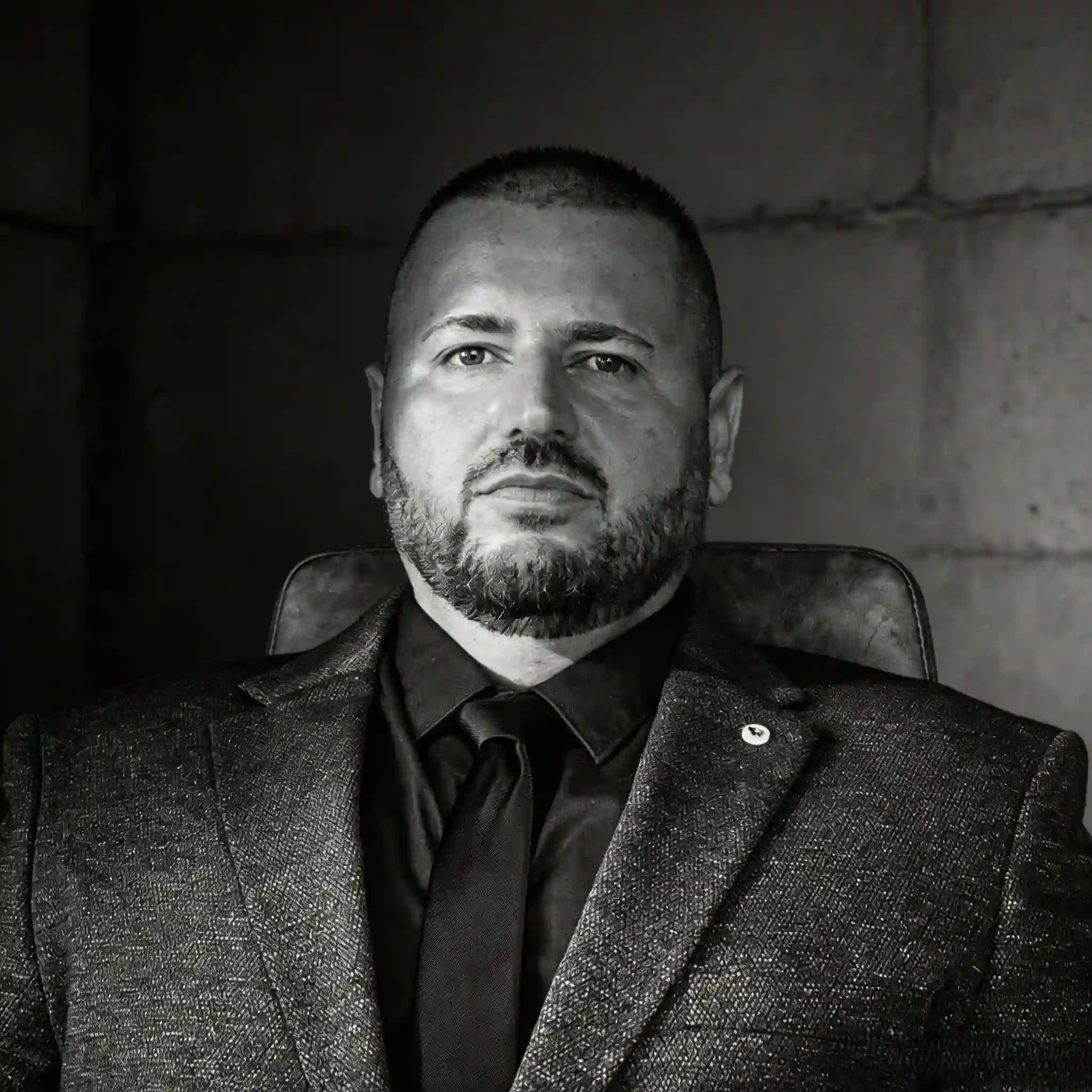
Gyula Györfi has more than two decades of experience in law enforcement and private security operations. During his career he supervised patrol operations, inspected night patrol routes, and participated in the protection of sensitive diplomatic facilities including the U.S. Embassy and official residences in Budapest.
He is the founder of the Trinity Guard® patrol verification platform, developed to bring verifiable operational proof into modern security patrol management.