U.S. security companies are under pressure to prove that every patrol really happened. In this guide we compare
GPS patrol, QR patrol and AI-powered patrol verification so you can choose the right guard
tour system mix for 2025–2026.
By Gyula GyörfiUpdated for 2025–2026Focus: U.S. security guard companies & corporate security teams
Fake patrols, skipped checkpoints and incomplete reports still destroy security contracts in the U.S. every day.
Clients now expect live transparency, not just end-of-shift paper logs. That is why choosing between
QR codes, GPS tracking and AI patrol verification is no longer only a technical question —
it is a business decision.
In this article we break down how each patrol method works, where it is strong, where it fails, and how a modern
guard tour patrol system like Digital Guard Tour combines them into one AI-powered security guard app.
1 GPS patrol
GPS Patrol — The Industry Standard for Outdoor Routes
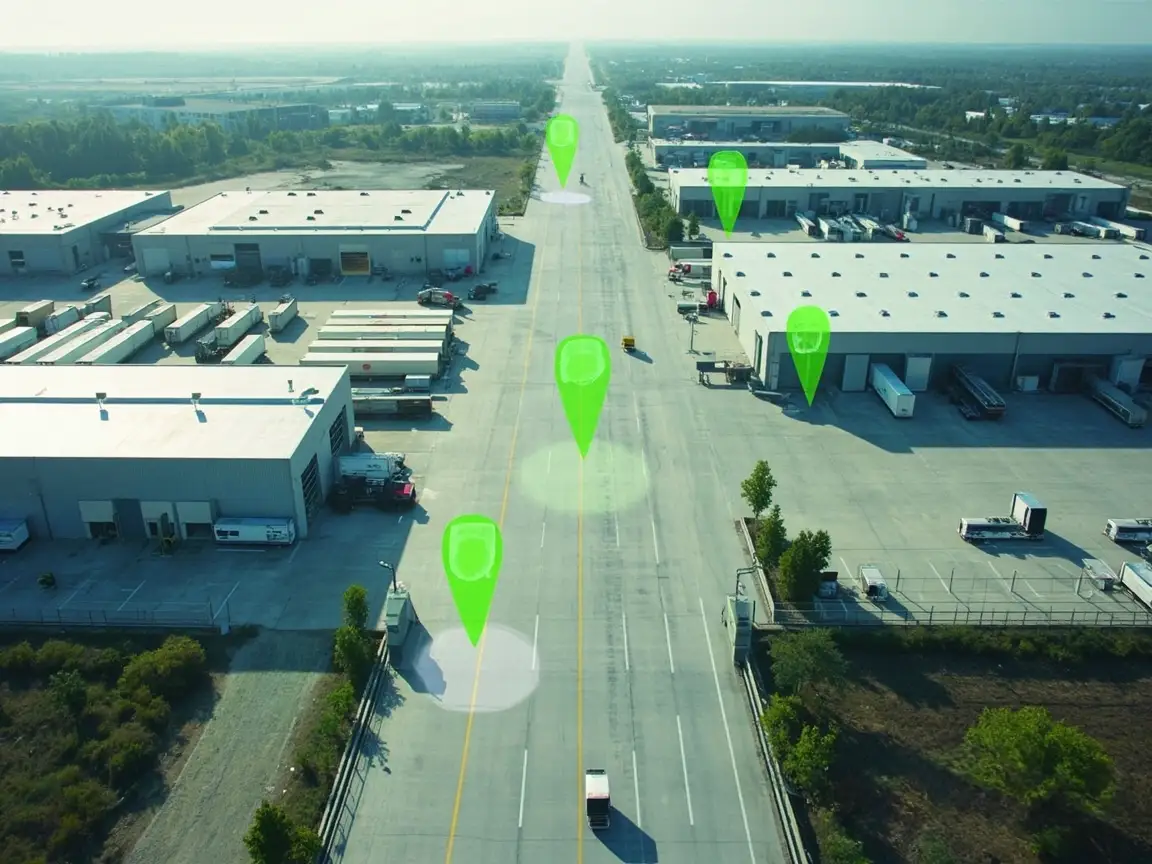
GPS patrol means your guards carry a mobile security guard app that continuously tracks their movement.
Supervisors see live routes, checkpoints and activity on a map in the guard tour dashboard.
Digital Guard Tour can validate patrols with GPS movement, QR checkpoints and AI analysis at the same time.
How GPS patrol works in a guard tour system
Guard in the field: carries the Digital Guard Tour mobile app.
GPS tracking: the route is logged automatically in the background.
Geofences & checkpoints: the system can confirm that the guard actually reached a zone.
Supervisor view: operators see live patrol status on one map-based dashboard.
GPS patrol — strengths
Perfect for outdoor patrols at warehouses, yards, ports and campuses.
No hardware to install — guards just need a smartphone.
Real-time situational awareness for the dispatcher or control room.
Easy to deploy across the U.S. for mobile, vehicle and foot patrols.
GPS patrol — weaknesses
Indoor GPS can drift, especially in dense buildings or underground parking.
Movement alone does not prove that the guard checked a specific door or asset.
Without AI, some guards may still “drive the route” instead of doing full on-foot patrols.
Takeaway: GPS patrol is essential for large outdoor sites. But by itself it cannot guarantee
that every critical checkpoint was physically inspected.
2 QR patrol
QR Patrol — Precise, Low-Cost Checkpoint Proof Indoors
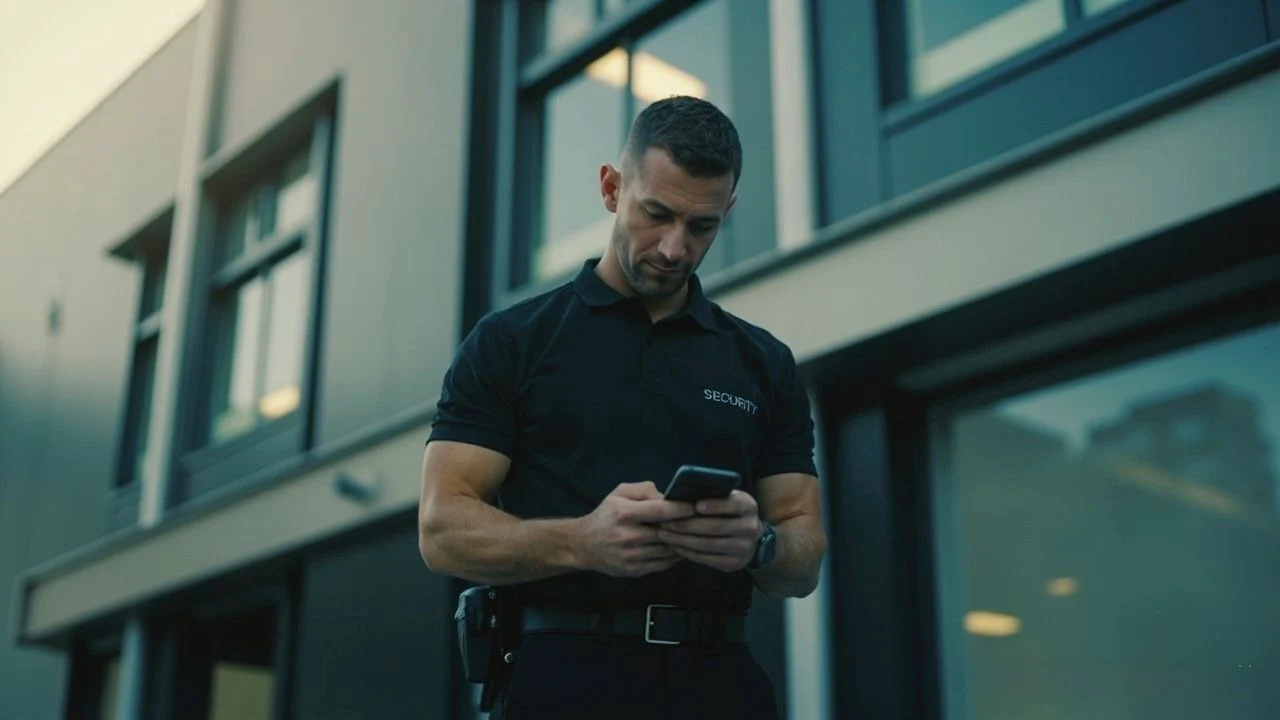
In a QR-based guard tour patrol system, each checkpoint has a QR code. The guard scans the code with
the mobile app, which records the exact time, location and which guard visited the point.
QR checkpoints give precise indoor proof of presence, especially when tied to mandatory tasks at each point.
How QR patrol works
Setup: you place QR codes at doors, gates, fire exits, stairwells, racks or sensitive rooms.
Patrol: the guard scans the code using the Digital Guard Tour security guard app.
Evidence: the system logs checkpoint, guard, time and GPS position.
Reporting: supervisors and clients can see exactly which checkpoints were done.
QR patrol — strengths
Very accurate proof of presence for indoor routes and detailed checklists.
Hard to cheat — the guard must be physically at the QR code.
Low-cost infrastructure that can be deployed in days, not months.
Perfect for offices, hospitals, hotels, museums and retail security in the U.S.
QR patrol — weaknesses
Requires physical stickers or plates that can be damaged and must be maintained.
If the app does not enforce tasks, a guard could still scan without inspecting.
Not ideal as the only method for huge outdoor sites where GPS patrol is more natural.
Takeaway: QR patrol is excellent for structured indoor routes, especially when every checkpoint
has specific tasks — for example fire extinguisher checks, door status or temperature readings.
3 AI patrol
AI Patrol Verification — The 2026 Game-Changer
GPS and QR give you data. AI transforms that data into real patrol verification.
Digital Guard Tour’s AI engine continuously analyses routes, timing, incidents and guard behaviour to detect
anomalies that traditional guard tour systems simply miss.
Digital Guard Tour uses AI to analyse every movement, checkpoint, task and incident — and flags suspicious patrol
patterns in real time.
What AI patrol verification can detect
Incomplete patrols where key checkpoints are constantly skipped.
Unrealistic routes that would be impossible to walk in the time recorded.
Pattern anomalies such as always “rushing” the last part of the patrol.
Repeated scan tricks (for example scanning multiple QR codes too fast).
Suspicious schedule behaviour across guards, shifts and locations.
AI patrol — strengths
No additional hardware — AI lives inside the Dispatch System and mobile app.
Works with GPS and QR together, connecting movement and checkpoint proof.
True anti-cheat layer that protects both security companies and their clients.
Supervisors can manage 5–10× more guards because AI surfaces the real issues.
AI patrol — limitations
Requires a modern, cloud-based guard patrol system – legacy NFC or baton tools cannot benefit.
Like any AI, it must be tuned to your sites and patrol patterns during rollout.
Takeaway: in 2025–2026 AI is no longer “nice to have”. It is the layer that turns GPS and QR
patrol data into genuine proof that every route actually happened.
4 Comparison
GPS vs QR vs AI — Side-By-Side for U.S. Security Teams
Each method plays a different role. The question is not “which one should we use?” but
“how do we combine them in one guard tour patrol system ?”
GPS patrol
Best for outdoor coverage
Ideal for yards, ports, campuses and long perimeter patrols. Gives dispatchers live visibility, especially
when combined with vehicle and foot patrol routes.
QR patrol
Best for indoor accuracy
Perfect for doors, racks, floors and technical rooms. Provides clear proof that a guard reached a specific
point at a specific time.
AI verification
Best for anti-cheat & audits
Evaluates every patrol as a whole, detecting missing checkpoints, impossible routes and suspicious patterns.
Essential for contract renewals and serious incidents.
2026 Outlook — The Winning Patrol Mix for U.S. Security Companies
Looking at current Digital Guard Tour deployments and trends in the U.S. market, here is what we expect by 2026:
NFC & baton systems fade out — they cannot deliver the transparency clients demand.
GPS remains core wherever guards patrol large outdoor or multi-site environments.
QR grows in importance indoors, especially for compliance-heavy industries.
AI patrol verification becomes mandatory for serious RFPs and national contracts.
So what should you deploy?
Mainly outdoor sites in the U.S.? Start with GPS + AI.
Complex buildings and campuses? Use QR + AI inside, GPS + AI outside.
Mixed portfolio of clients? Standardise on GPS + QR + AI so every patrol is covered.
Digital Guard Tour is built for this “triple layer” model:
one mobile security guard app, one AI-powered Dispatch System, and full support for GPS patrol, QR patrol and AI patrol verification across all your U.S. sites.
Looking for a complete solution? Explore the complete guard tour system used by modern U.S. security companies.
FAQ — QR vs GPS vs AI in Modern Guard Tour Systems
Is GPS patrol enough on its own for a guard tour system?
For large outdoor sites GPS patrol is essential, but on its own it is not enough. Movement logs show where a
guard travelled, not what they actually checked. That is why most companies now combine GPS with QR checkpoints
indoors and AI patrol verification on top.
When is QR patrol better than GPS patrol?
QR patrol is better whenever you need precise proof at fixed points: doors, racks, fire exits, storage areas or
technical rooms. GPS can show that a guard was on a floor. A QR checkpoint can prove that the guard stood in
front of a specific door and confirmed its status.
What does AI add if I already use GPS and QR?
AI connects all patrol data — GPS routes, QR scans, tasks and incidents — and looks for anomalies that humans
would miss. It highlights incomplete patrols, impossible routes and suspicious timing, so supervisors can focus
on the 5–10% of patrols that really need attention.
Will AI replace guards, or only verify their patrols?
AI in Digital Guard Tour is not about replacing guards. It is about giving honest teams protection against fake
accusations and giving managers tools to detect bad patterns early. Guards still make decisions on the ground;
AI simply makes those patrols visible and verifiable.
Start Your 14-Day Free Trial
No credit card needed. Test GPS patrol, QR patrol and AI-powered patrol verification in one system.