
Pricing •COST BREAKDOWN • Guard Tour Patrol System
Guard Patrol System Software Pricing: Full Cost Breakdown (2026)
Most security companies compare monthly fees. The real cost of a guard patrol system goes much deeper — into hardware, setup, labor efficiency, reporting quality, and contract profitability.
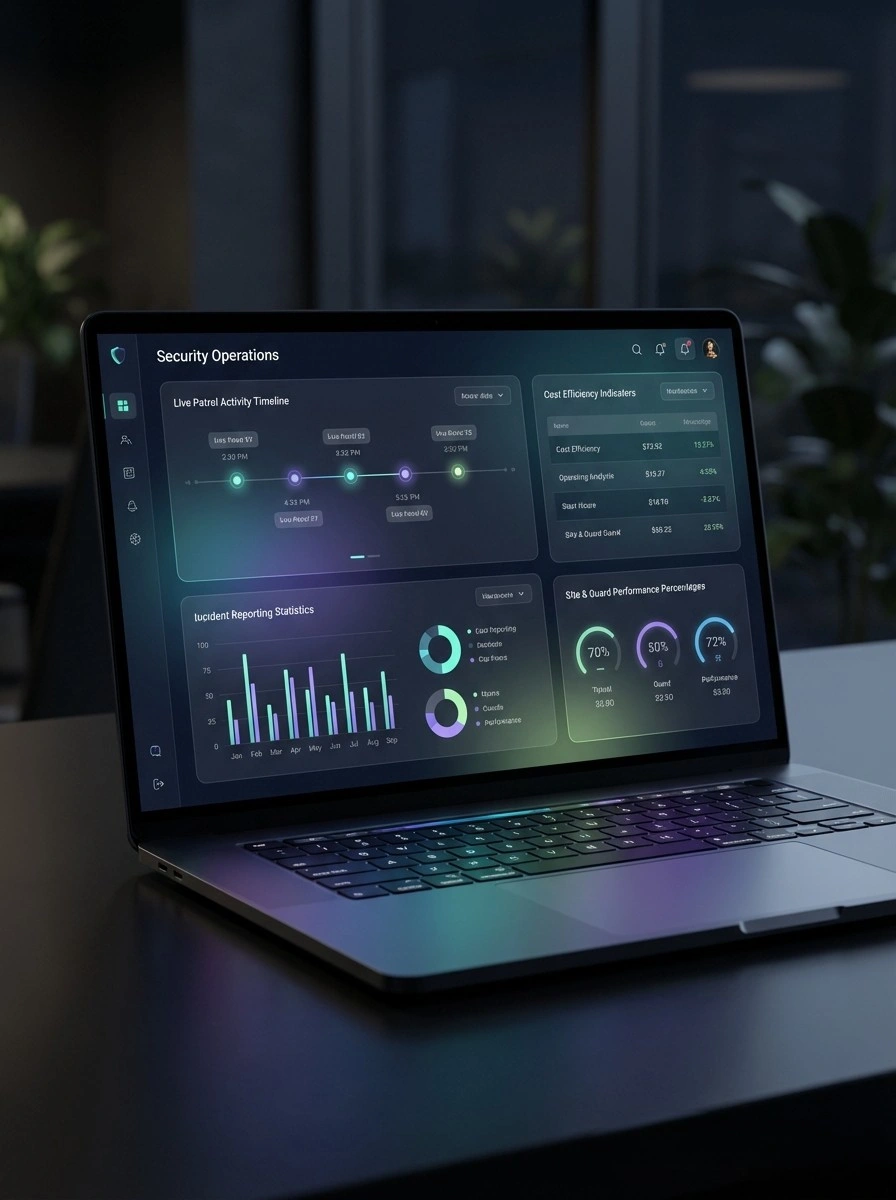
From pricing to performance, visibility defines real cost.
The cheapest guard patrol system is often the most expensive one in practice.
- Software subscription
- Hidden hardware costs
- Implementation overhead
- Operational inefficiency
Why guard patrol system pricing is often misunderstood
When security companies evaluate a guard patrol system, pricing is often misunderstood. Most vendors present simple monthly fees, but the real cost goes far beyond the subscription.
In 2026, a modern guard tour patrol system is not just software — it is an operational infrastructure that directly impacts labor efficiency, reporting accuracy, and contract profitability.
That is why software pricing should never be reviewed in isolation. The real question is not “What is the monthly fee?” but “What is the total operating cost of a modern guard tour system in real security work?
1. Software subscription cost
Most systems charge based on a few common variables:
Number of guards
Per-user pricing remains one of the most common billing models in patrol software.
Number of sites (objects)
Some platforms price by location count, which can quickly add up in multi-site security operations.
Feature tiers
Advanced reporting, AI tools, read-only client access, and incident modules are often locked behind higher plans.
Contract size
Enterprise deployments often move to custom pricing based on operational scale and structure.
Small teams
$20–$50 per guard / month
Mid-size companies
$100–$500+ per month
Enterprise deployments
Custom pricing
However, this is only the visible layer of cost.
2. Hidden hardware costs (legacy systems)
Traditional guard tour systems often require additional physical equipment:
RFID readers
Dedicated handheld devices increase upfront cost and replacement risk.
NFC devices
Specialized hardware adds friction, especially during expansion or site rollout.
Docking stations
Extra accessories create additional cost, logistics, and maintenance burden.
Replacement tags
Lost, damaged, or moved tags quietly increase long-term operating cost.
These introduce both upfront investment and ongoing maintenance costs.
Modern systems eliminate this dependency entirely.
Smartphone-based guard tour platforms remove hardware from the equation, reducing both cost and operational friction.
3. Implementation and setup cost
Many systems still require:
Onboarding calls
These slow down deployment and often make small pilots unnecessarily heavy.
On-site configuration
Travel, scheduling, and implementation overhead increase real launch cost.
Training sessions
Long onboarding cycles reduce speed and delay first value.
This increases both time-to-launch and operational cost.
Self-service guard tour systems reduce setup from weeks to minutes, allowing teams to deploy faster without external support.
Fast setup is not just convenience. It is cost control.
Start Free Trial — Test the System Without Setup Delay4. Operational cost impact
The largest cost driver is not the software itself — it is operational inefficiency.
Fake patrols
Poor verification creates risk, weakens trust, and damages contract value.
Missed checkpoints
Small patrol failures become expensive when they lead to complaints or incidents.
Incomplete reporting
Manual gaps create admin burden and reduce the value of every shift performed.
Unnecessary overtime
Lack of visibility leads to reactive management and wasted labor spend.
A properly implemented guard tour patrol system reduces:
Supervision overhead
Less chasing, less checking, more real-time visibility.
Administrative workload
Structured data and verifiable reporting reduce paperwork and manual follow-up.
Contract disputes
Proof of service improves transparency and strengthens client conversations.
5. Guard Tour System Cost Models (2026)
| Cost Factor | Legacy Systems (RFID/NFC) | Modern Systems (Software-Based) |
|---|---|---|
| Hardware required | Yes | No |
| Upfront investment | High | None |
| Setup time | Days / weeks | Minutes |
| Maintenance | Ongoing | Minimal |
| Scalability | Limited | Flexible |
| Real-time visibility | Limited | Full |
| AI support | No | Yes |
6. Where modern pricing models are heading
In 2026, leading platforms such as Trinity Guard® are moving toward fully software-based pricing models.
These systems eliminate hardware costs, reduce onboarding time, and provide real-time operational visibility through GPS, QR checkpoints, and AI-supported analysis.
Instead of charging for devices, modern guard tour platforms focus on delivering verifiable operational data.
The market is moving away from hardware ownership and toward proof-based software value.
7. The real cost equation
A guard patrol system should be evaluated using a complete cost model:
Total Cost Formula
Total Cost = Software + Hardware + Setup + Operational inefficiency
Atomic truth
A guard tour system does not reduce cost by being cheaper.
It reduces cost by making work verifiable.
Monthly price is only one layer of the total cost model.
Operational waste is usually more expensive than software.
The real pricing question is not “What does it cost?” but “What does it prevent?”
Conclusion
In 2026, the most effective guard patrol systems are:
Hardware-free
No readers, no docking stations, no device overhead.
Mobile-first
Use the phones your team already carries in the field.
AI-supported
Modern pricing increasingly reflects data quality, not hardware quantity.
Scalable
Your system should expand with contracts, not fight against them.
If your system does not improve visibility and reduce operational waste, it is not saving money — it is hiding problems.
Start your evaluation with a modern, software-based guard tour patrol system
Designed for real operational visibility, lower hidden cost, and faster rollout without hardware lock-in.
- Commercial intent: helps buyers evaluate true cost
- Pricing clarity: explains hidden cost layers
- Modern positioning: software-based vs hardware-based
- Trust building: pricing framed through operations, not hype
- Conversion-ready: naturally leads to product evaluation