
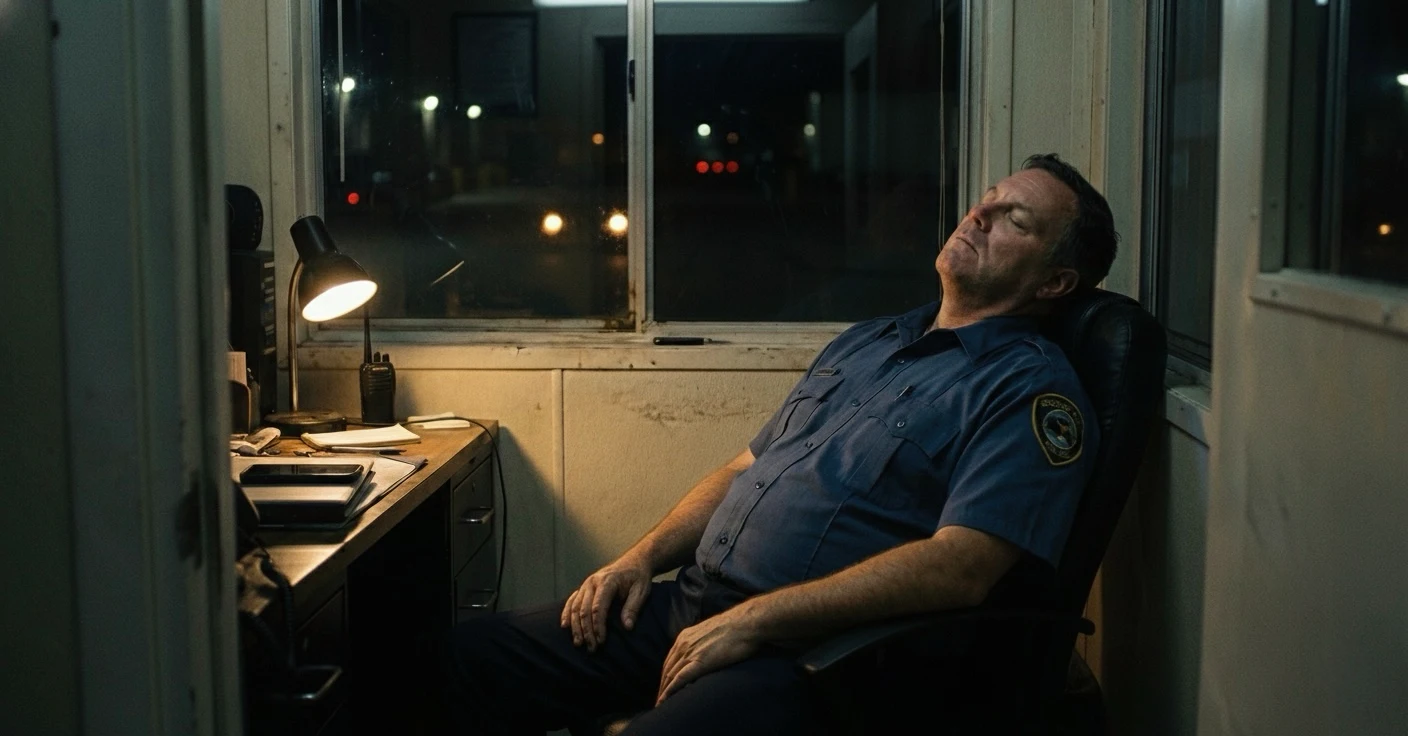
Monotony: The Silent Productivity Killer
Patrolling is a repetitive task with little variation. Walking the same route, passing the same checkpoints, and checking the same doors creates mental fatigue, reduced alertness, autopilot behavior, and lack of engagement.
Monotony kills vigilance faster than distraction ever could.
Night Shifts: When Human Physiology Works Against the Job
Most skipped rounds happen at night because the human body is not built to stay alert between 1 AM and 5 AM. Night shifts bring micro-sleeps, slower reactions, lower motivation, and impaired judgment.
Even the best guards can’t outsmart their biology.
Fatigue: Under-Rested Guards Make Poor Decisions
When guards are not well-rested, they perform only the minimum required. Chronic fatigue leads to lower awareness, more errors, and a natural search for shortcuts.
Low Pay and Low Motivation
“When the salary is low, motivation is low — and when motivation is low, patrol quality drops.” Underpaid guards often adopt a survival mindset: do what’s required, nothing more.
Lack of Supervision Leads to Minimal Effort
Human behavior is predictable: what is not monitored will eventually be neglected. Without verification, complacency grows and accountability fades.
Subtle Resistance: Small Acts of Pushback
Some guards engage in micro-resistance — skipping “unnecessary” rounds or ignoring disliked checkpoints as silent protest. These behaviors emerge in rigid or unsupported work environments.
How Modern Technology Solves These Problems
Modern guard tour systems support security teams by:
- Reducing monotony — structured patrol routes, clearly defined checkpoints, and task-based patrol execution that keeps rounds consistent
- Supporting night shifts — simple control tasks built into the patrol workflow that require active confirmation during each round
- Increasing accountability — GPS and QR-based patrol verification combined with a guard tour patrol system and supervisor dashboards for transparent oversight
- Improving motivation — proof-based transparency that reduces unfair blame and supports recognition of consistent performance
- AI-assisted oversight — highlights irregularities and context anomalies in patrol data so supervisors can review and act
Modern systems don’t punish — they protect both sides.
Performance Visibility Turns Supervision into Motivation
The Trinity Guard system automatically evaluates each guard’s daily performance as a percentage — providing supervisors with a clear, data-based overview of every shift.
This insight allows leaders to motivate through recognition, not punishment. By sharing results and rewarding those who consistently perform well, supervisors turn data into encouragement — and accountability into progress.
Performance visibility turns supervision into motivation.
When effort is seen, effort grows.
Conclusion
Missed patrols are not operational failures — they are human behaviors shaped by fatigue, motivation, and culture. Understanding the psychology behind them lets us fix the issue without blame.
Modern technology doesn’t monitor people — it supports them, providing accountability that actually works.