
Case Study • U.S. Guard Tour Verification
🇺🇸 Case Study: Why Traditional RFID Guard Tour Systems Are Obsolete — A Veteran Police Perspective
As a law enforcement veteran with 26 years of police service, I conducted countless official inspections of private security firms. During these regulatory audits, one critical vulnerability appeared again and again: the fundamental unreliability of traditional RFID-based guard tour systems.
This insight — shaped by real-world police inspections — became the foundation of our Veteran Police Development approach at Trinity Guard.
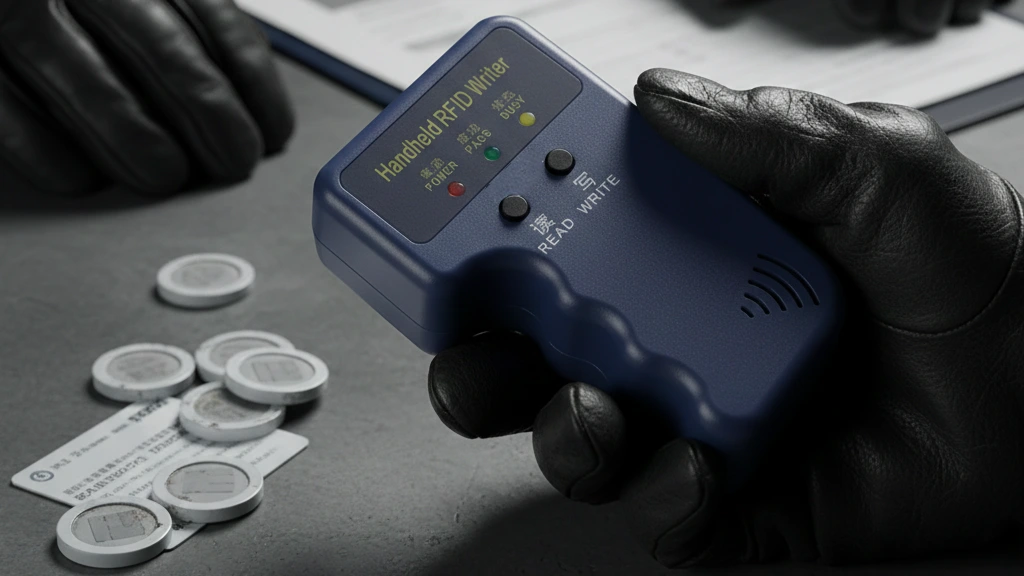
A mid-sized U.S. security provider recently faced the same reality I repeatedly encountered during my years in uniform. The company relied on unencrypted 125 kHz RFID checkpoints as “proof of presence.”
An internal audit, driven by the same inspection logic used in law enforcement oversight, exposed an uncomfortable truth: these RFID tokens provided the appearance of control, not real verification.
Using inexpensive RFID duplicators — openly available on the market for only a few dollars — standard RFID checkpoints can be cloned in seconds. No technical expertise is required.
Once a tag is duplicated, the system cannot distinguish between a guard physically completing a patrol and a cloned tag being scanned in a breakroom or office. To the system, both events appear equally valid. Both are treated as “fact.”
Throughout my law enforcement career, I witnessed how easily static, token-based, and paper-driven systems could be manipulated. These systems failed not because of people, but because of their design.
Guard tour verification has reached the same turning point once faced by standalone GPS devices and digital cameras: evolve, or become a liability.
This realization drove us to move beyond the static logic of traditional RFID systems and toward a modern guard tour system.
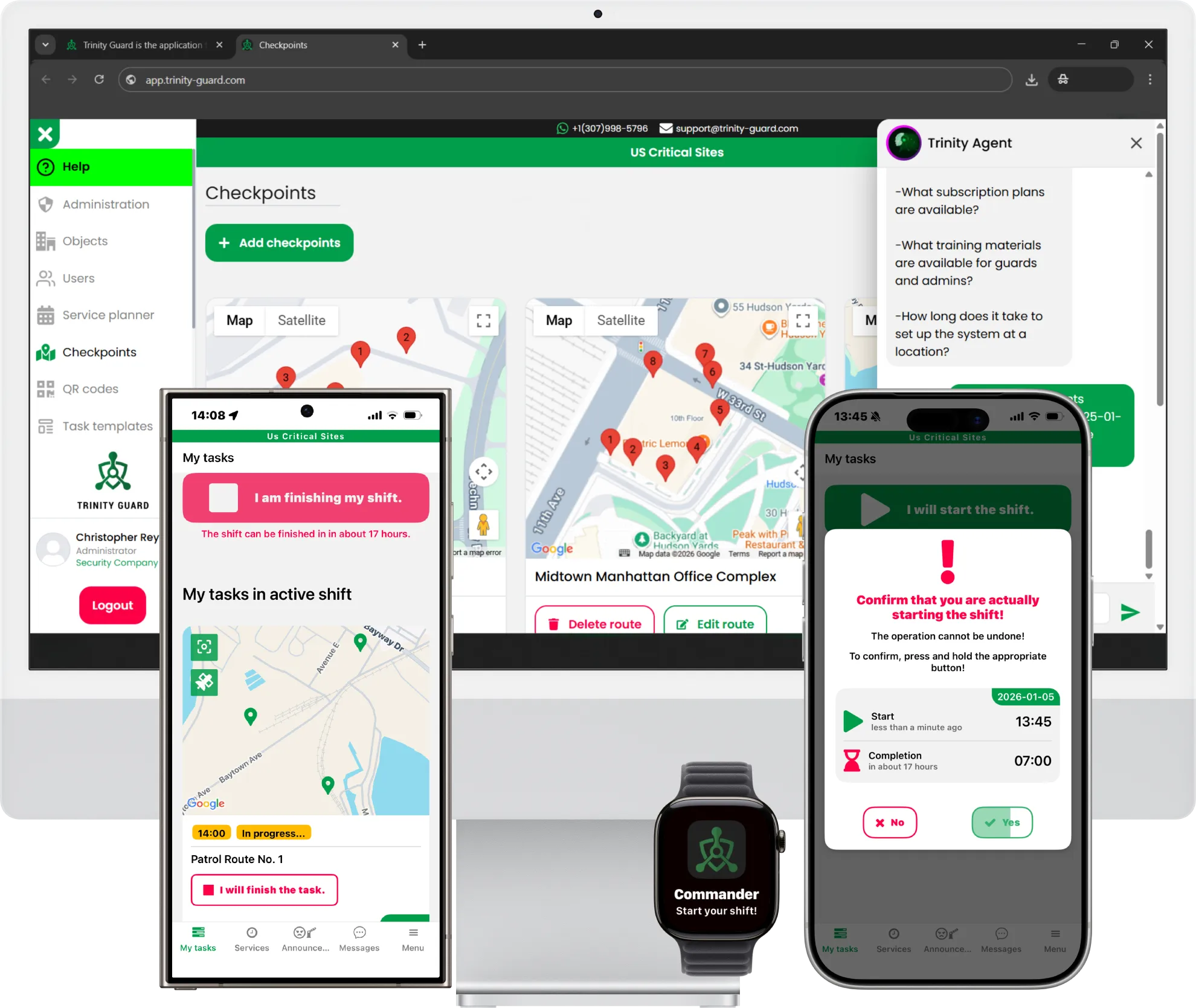
Instead of relying on a single, easily replicated physical token, our mobile-based guard tour patrol system — developed through a Veteran Police Development lens — focuses on behavior, context, and verification:
- Contextual Verification
GPS tracking activates only during active patrols. - Behavioral Analysis
Patrol routes, timing patterns, and movement consistency are evaluated as a whole. - Anomaly Detection
Irregularities and inconsistencies are detected — issues that static RFID tokens are fundamentally incapable of identifying.
Modern security operations require intelligent, verifiable solutions built by those who understand not only how systems are meant to work — but how they are actually bypassed in the real world.
Next step
Start your 14-day free trial — no hardware, no commitment.
See how modern, verifiable patrol accountability works in real operations — with mobile-based verification and operator visibility.