
The 5 Pillars of Modern Guard Operations — And Why AI-Powered Patrol Platforms Are Becoming Essential
Labor pressure, rising costs and client expectations are reshaping physical security. Here is how U.S. security companies can modernize guard operations with data, AI and patrol verification.

1. Why guard operations need a new foundation in 2025
The U.S. security industry is under pressure from every direction: labor shortages, wage inflation, more demanding clients and contracts that require documented proof of service on every shift. Cameras and sensors have improved, but on-site guard operations remain the backbone of professional protection.
The problem is simple: traditional guard models were built for a world without real-time data. Patrols were assumed to have happened if nobody complained. Today, that is no longer enough. Clients expect verified patrols, transparent reporting and fast incident response — without paying unlimited overtime.
This is why leading security companies are rebuilding their operation around five core pillars: professionally trained officers, integrated technology, data-driven cost control, layered security architecture and disciplined management — all supported by an AI-ready digital patrol platform.
2. Pillar one — A professionally trained and accountable workforce
No AI engine, sensor or camera can compensate for poorly trained personnel. Modern guard operations begin with a capable, trained and accountable human workforce.
In the United States, the cost of deploying a licensed security officer commonly ranges between $21–$35 per hour, depending on the state, risk profile and contractual requirements. With wages at this level, every hour needs to deliver measurable value.
High-performing providers invest in:
- legal and ethical training aligned with local regulations,
- conflict-resolution and de-escalation techniques,
- emergency response and first aid basics,
- clear radio and client communication skills,
- scenario-based training for high-risk environments.
However, training alone is not enough. Without objective oversight, even the best officers may occasionally skip checkpoints, rush routes or improvise. This is where digital patrol verification and AI oversight turn training into consistent, day-to-day behavior.
3. Pillar two — Technology integration and real-time visibility
The second pillar of modern guard operations is the tight integration of technology into daily routines. The goal is not to replace officers but to give supervisors and clients real-time visibility into what is happening on site.
A modern guard tour platform connects:
- GPS-based patrol tracking and geofencing,
- QR / NFC checkpoint scans for precise proof of presence,
- mobile incident reporting with photos, notes and timestamps,
- cloud dashboards for supervisors and dispatchers,
- audit-ready history for internal reviews and client reporting.
Instead of hoping that routes are completed, supervisors can see in real time if a patrol was delayed, skipped or cut short. This capability alone transforms the relationship with clients: you no longer “promise” service — you demonstrate it with data.
4. Pillar three — Cost optimization through transparent data
Labor is the single largest line item in most security contracts. Every extra post, unnecessary overtime hour or inefficient schedule directly reduces profitability. Without data, these losses stay invisible.
A digital patrol platform like DigitalGuardTour.com gives management the data needed to:
- identify posts that are overstaffed or underutilized,
- reduce unnecessary overtime with smarter scheduling,
- eliminate manual paperwork and duplicated admin work,
- detect “ghost patrols” and low-activity periods,
- justify pricing and renewals with objective service metrics.
When clients see verified, searchable history of every patrol and incident, conversations shift from “Why is this so expensive?” to “We can clearly see the value you deliver.” That is how transparent data protects both margins and relationships.
5. Pillar four — Integrated physical, electronic and human layers
Effective security is never built on a single layer. The most resilient sites combine:
- physical protection — fences, gates, locks, barriers, lighting,
- electronic systems — CCTV, sensors, alarms, access control,
- human presence — trained, visible officers on patrol.
A digital guard tour solution strengthens the human layer by ensuring that officers:
- follow exact patrol routes, tailored to the site’s risk map,
- visit critical assets and blind spots on schedule,
- document anomalies so electronic and physical measures can be improved.
With the right balance between technology and manpower, companies can reduce total guard hours without reducing security. Patrols become smarter, not heavier — and every minute on site is used intentionally.
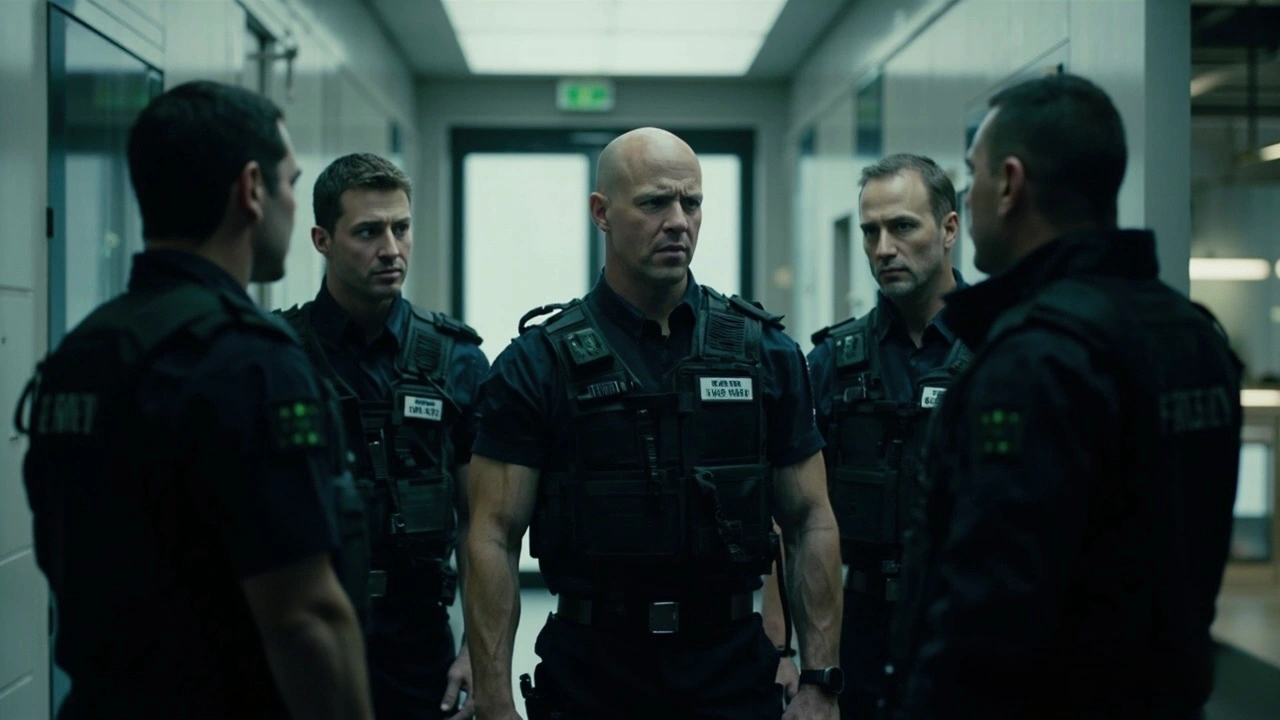
6. Pillar five — Data-driven security management and continuous improvement
The fifth pillar is often the most neglected: structured security management based on data, not intuition. Instead of reacting only when something goes wrong, modern leaders track performance and refine operations continuously.
With an AI-ready patrol platform, security managers can:
- analyze incident trends by time, location and guard team,
- review missed checkpoints and delayed routes over weeks or months,
- measure guard performance for coaching, training and recognition,
- run regular risk assessments based on real patrol behavior, not assumptions.
This disciplined approach turns guard operations from a “necessary expense” into a strategic function that actively protects people, assets and reputation — while showing a clear return on investment to clients.
7. Where AI changes the game — DigitalGuardTour.com and Trinity Agent
Modern guard operations can no longer be separated from digital innovation. AI-supported tools like Trinity Agent / AI Patrol Intelligence, deployed through DigitalGuardTour.com, bring a new level of reliability to everyday patrols.
Key advantages include:
- Real-time AI oversight — immediate alerts when a guard tries to skip a checkpoint, cut a route short or deviate from standard protocol.
- Verified checkpoints (GPS + QR) — every patrol step is time-stamped, geo-tagged and linked to a specific officer and device.
- Cloud-native architecture — no local servers, no on-site maintenance, automatic updates and secure access from any browser.
- Dynamic scheduling — smarter shift planning that can reduce overtime costs by up to 25% in well-managed operations.
- Real-time incident reporting — guards document events with photos, notes and GPS coordinates; supervisors approve or escalate with a single click.
- Client transparency by design — read-only access for clients to patrol logs and incident history, strengthening trust and renewals.
Instead of juggling spreadsheets, paper logs and radio calls, your entire operation runs on a single, AI-ready platform that aligns guards, supervisors and clients around the same real-time data.
8. Turn your guard operation into a digital, transparent and AI-assisted service
The guard industry is changing faster than many companies realize. Those who rely only on manual supervision and paper logs will struggle to keep contracts and protect margins. Those who adopt AI-supported patrol verification and data-driven management will stand out as trusted, modern security partners.
With DigitalGuardTour.com you get:
- AI-assisted GPS and QR patrol verification,
- cloud-based dashboards for supervisors and clients,
- incident reporting with photos, notes and GPS coordinates,
- structured, AI-ready data for analytics and continuous improvement.
9. FAQ — Common questions about AI-powered guard tour systems
Does DigitalGuardTour.com replace security guards with AI?
No. DigitalGuardTour.com is designed to support security officers, not replace them. AI is used for oversight, compliance and early detection of problems such as skipped checkpoints or route deviations. Human judgment, presence and communication remain at the center of every operation.
Can clients access patrol and incident data in real time?
Yes. Clients can access read-only dashboards that show verified patrols, incident history and timestamps. This transparency reduces disputes, simplifies renewals and helps position your company as a long-term security partner rather than a basic guard supplier.
How does the system help prevent “fake patrols” or shortcut routes?
AI analyzes GPS movement, checkpoint scan patterns and route timing to detect suspicious behavior. If a guard scans checkpoints too quickly, misses critical points or stays inactive for long periods, the system can trigger alerts so supervisors can react immediately instead of discovering issues weeks later during an audit.
Is an AI-ready patrol platform useful for small security companies?
Absolutely. Smaller firms often benefit the most because they have limited management time and need tools that scale with them. Even a few sites running on DigitalGuardTour.com gain cleaner reporting, less paperwork and a stronger position when competing for larger contracts.
Do we need local servers or special hardware to deploy DigitalGuardTour.com?
No. DigitalGuardTour.com is a cloud-native platform. Guards use smartphones they already carry, and supervisors access the command dashboard through a web browser. This eliminates server maintenance, reduces IT overhead and makes it easy to roll out across multiple sites and regions.
How quickly can a security company go live with the system?
Most teams can be operational within days, not months. Once sites, routes and checkpoints are configured, guards can start scanning and reporting immediately. From there, AI oversight and performance analytics grow in value as more patrol data is collected.