
The Hidden Cost of Fake Patrols — And How AI Stops Them
🛡️ Security Alert: Fake patrols are a major risk in modern guarding. This article expands on the "Risk Management" section of our main guide. See how a guard tour patrol system prevents fake patrols →
Fake patrols quietly damage contracts, reputation and safety. Here is how GPS, QR and AI-backed verification eliminate them in modern guard tour operations.
1. Fake patrols are more common than most security managers think
Every security company eventually faces the same uncomfortable reality: some guards will try to cheat a patrol.
Not every case happens because a guard intends to cheat. When shifts run long, low staffing and routine pressure often push guards to take shortcuts. These shortcuts eventually turn into typical fake-patrol patterns such as:
- scanning checkpoints without walking the full route,
- using screenshots of QR codes instead of visiting the site,
- scanning printed QR codes kept in the guardroom,
- claiming checkpoint passes that never actually happened.
On paper, everything looks perfect. In reality, critical areas may never be checked.
For clients, this slowly destroys trust. For supervisors, it creates blind spots. For the company, it creates serious operational and legal risk.
2. Why legacy guard tour systems fail to stop cheating
Traditional patrol systems record events, not reality.
- RFID tags can be removed from walls and “tapped” at a desk.
- QR codes can be photographed and re-used from a phone screen.
- Paper logs and manual timestamps are easy to manipulate.
In those setups, a guard can produce a “perfect” report without performing the actual patrol. The system has no way to tell the difference between a real and a fake round.
That is why the industry has been moving towards smarter, data-driven patrol verification. Modern guard tour patrol systems are built to verify real patrol execution →
3. GPS + QR hybrid verification as the new baseline
DigitalGuardTour.com uses a hybrid model designed for real-world security work:
- GPS tracking for outdoor movement and open areas,
- QR checkpoints for precise indoor locations,
- cloud-based timestamps for every scan and action,
- device identification to bind activity to a real phone.
GPS shows that the guard did not just stay in the guardroom. QR codes confirm that they actually reached the right doors, gates and critical points.
But strong data is only half the story. The real breakthrough comes from how this data is analyzed.
4. Trinity Agent: AI that catches QR manipulation and missing work
The Trinity Guard platform includes Trinity Agent — an AI engine that focuses on one thing: did the guard really do the work the report claims?
It doesn’t invent scenarios or guess behavior. It analyzes actual patrol data and alerts supervisors when something does not add up.
4.1 Detecting fake QR scans
Trinity Agent analyzes every QR checkpoint scan and can detect when guards try to cheat by:
- scanning printed copies of QR codes,
- scanning photos or screenshots instead of real tags,
- re-using the same static QR image over and over.
When a scan looks suspicious, the system sends a real-time alert to supervisors.
4.2 Verifying shift start and task start
Trinity Agent also verifies that basic obligations are met:
- the guard properly starts the shift in the system,
- required tasks are started as scheduled,
- mandatory steps in a patrol structure are not skipped.
4.3 Validating checkpoint completion
Beyond individual scans, the AI checks whether:
- all planned QR checkpoints were scanned,
- any critical checkpoint was completely missed,
- the overall patrol structure matches what was assigned.
It is a simple question with a powerful answer: Was the planned patrol actually completed, or not?
4.4 Asking Trinity Agent for patrol, entry and incident data
Supervisors can also chat with Trinity Agent directly inside the system. They can ask for:
- patrol summaries and route history,
- checkpoint scan history for a site,
- incident reports for a specific period or client,
- vehicle entry and exit logs,
- shift activity details.
Instead of digging through menus and filters, managers get the information they need in seconds.
5. Real-time alerts before the client notices anything
When Trinity Agent detects:
- fake or manipulated QR scans,
- shifts not started correctly,
- tasks that were never started,
- checkpoints that were never scanned,
it immediately notifies supervisors.
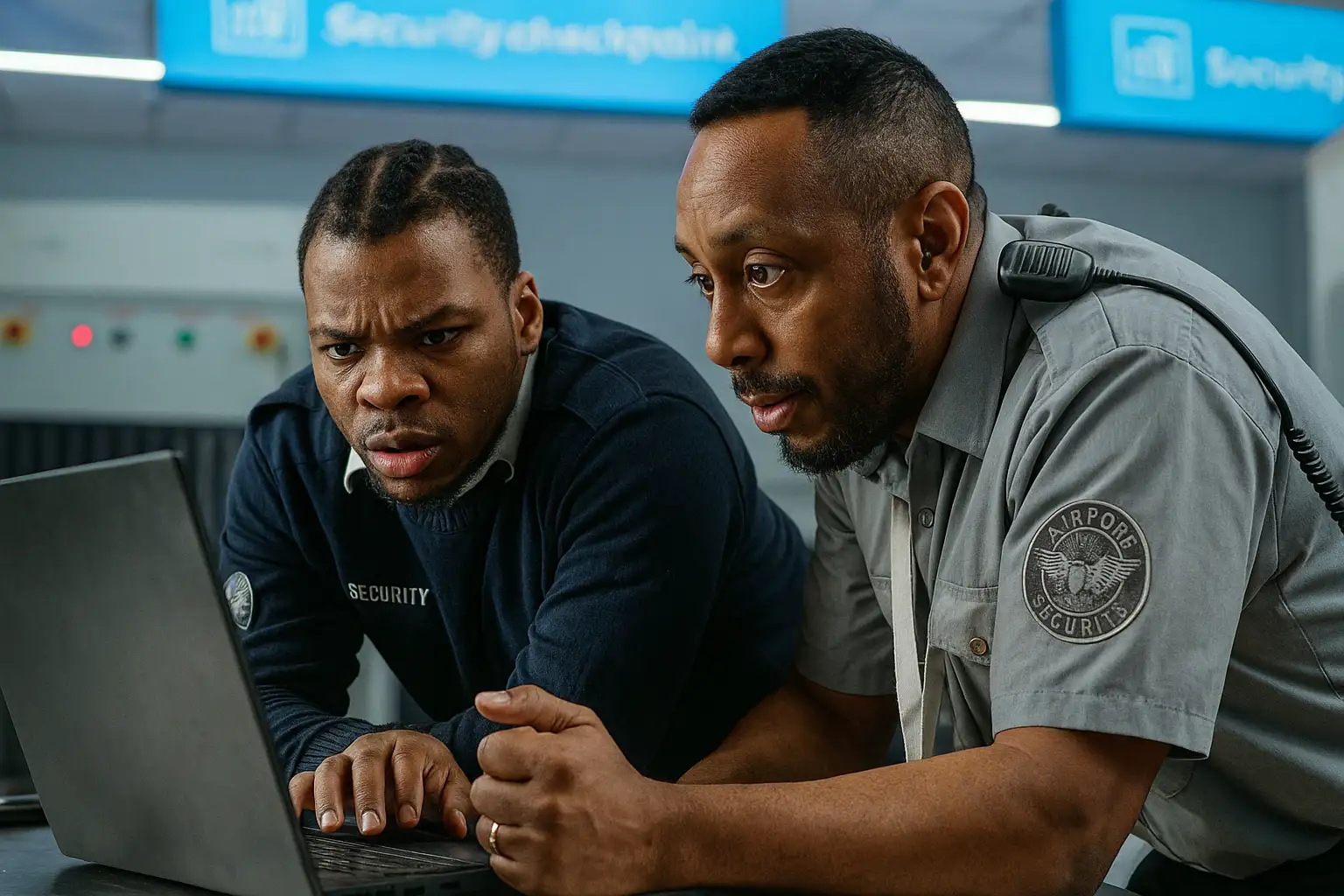
That gives your team a crucial advantage: you can correct problems internally before the client ever raises a complaint.
6. Why AI-backed patrol integrity builds client trust
Clients are no longer satisfied with vague reports and generic “shift completed” statements. They want:
- clear evidence that patrols were actually done,
- transparent documentation,
- data that cannot be easily manipulated,
- fast answers when something happens on site.
By combining GPS, QR codes and Trinity Agent, DigitalGuardTour.com provides a patrol history that is:
- authentic — scans are real, not screenshots,
- complete — all checkpoints are accounted for,
- auditable — every action is timestamped and stored,
- searchable — supervisors can retrieve details via AI chat.
This level of clarity is exactly what supports contract renewals and long-term partnerships.
7. The new standard for patrol verification
For years, security companies had to choose between trust and proof. With Digital Guard Tour powered by Trinity Guard, they finally get both.
Your patrol verification can now be:
- smartphone-based — no special hardware needed,
- QR-verified — every checkpoint confirmed,
- AI-checked — fake scans and missing work detected,
- instantly searchable — via chat with Trinity Agent.
Fake patrols don’t just become harder — they become a thing of the past.
8. FAQ: Fake patrols and AI-backed verification
How do fake patrols usually happen in real life?
Most fake patrols start as shortcuts. Guards scan checkpoints without walking the full route, use screenshots of QR codes, or keep printed tags in the guardroom. On paper the round looks perfect, but critical areas are never checked — and neither the client nor the supervisor sees the gap until something goes wrong.
Can a guard still cheat if they know the system well?
Legacy systems are easy to game because they only log that a tag was scanned, not how it was scanned. Digital Guard Tour combines GPS movement, QR scans and device identification. Trinity Agent then analyzes this data and flags patterns that do not match a real patrol, such as clusters of scans from a single spot or repeated use of the same QR image.
Do we need to buy special hardware to prevent fake patrols?
No. Guards use the smartphones they already carry. QR codes on site and GPS in the app create the patrol trail, while Trinity Agent checks the data for manipulation. This removes the cost and friction of dedicated readers while still giving you strong evidence that the patrol was actually performed.
What kind of alerts will supervisors receive?
When Trinity Agent detects suspicious QR scans, missing checkpoints or shifts that were not started correctly, it sends real-time alerts. Supervisors can react before the client notices a problem, correct guard behavior, and document the response in the same system.
Is AI replacing human supervision in patrol control?
No. AI in Digital Guard Tour does not replace supervisors — it gives them better eyes on the patrol data. Trinity Agent analyzes scans, GPS traces and shift activity, then highlights risk and anomalies. Human managers still make the decisions, but they no longer have to guess what really happened on site.