
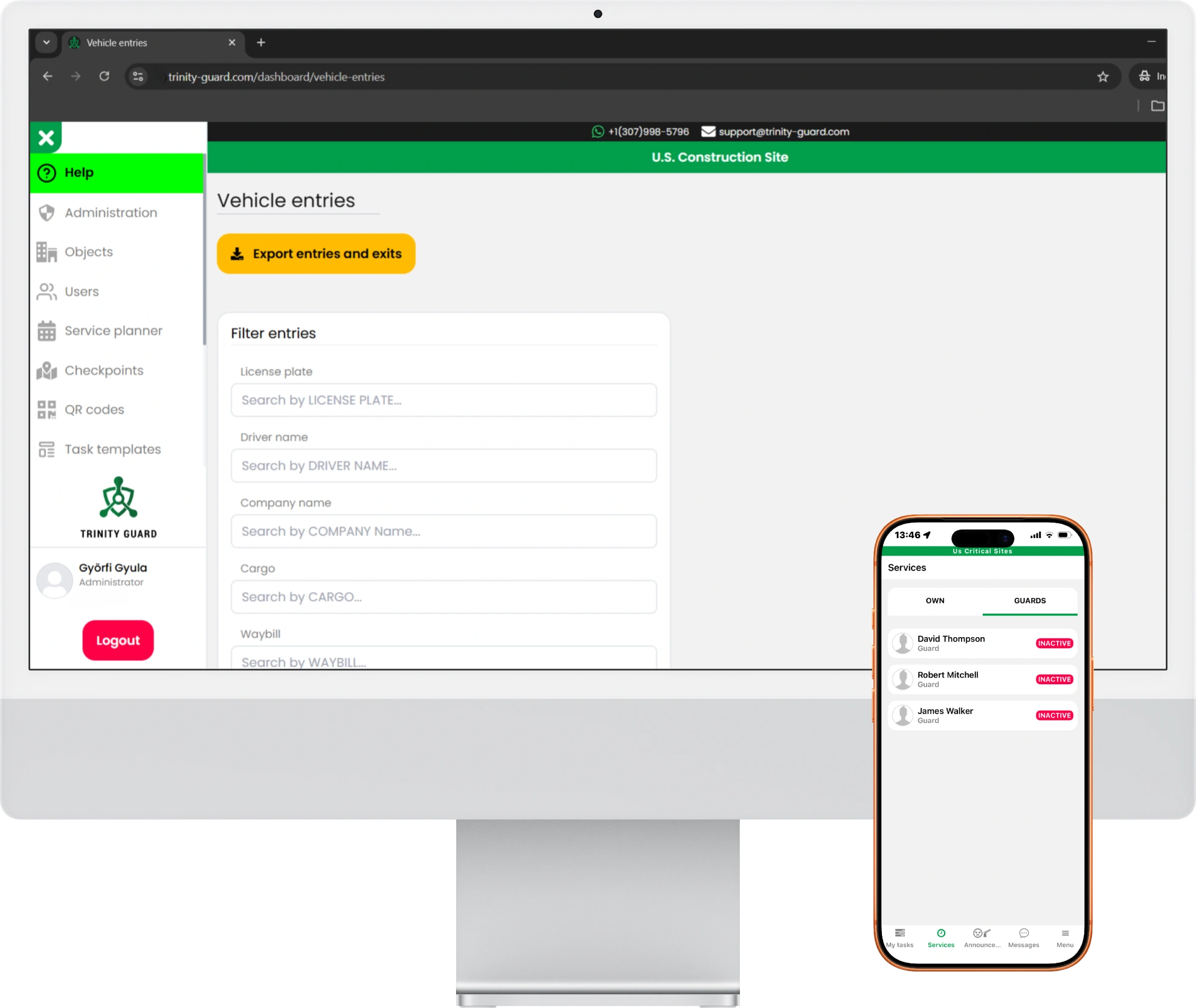
For the full story and system context, see the complete guard tour patrol system case study .
The Result: How Verified Data Exposed the Theft Pattern
The biggest difference between paper logs and a software workflow is not “prettier reports.” It’s comparability.
Once the jobsite had verified patrol records, checkpoint events, vehicle logs, and incident notes in one place, the team could correlate events instead of guessing.
You can’t correlate what you can’t verify.
What the analytics revealed
A service vehicle appeared in access records at irregular times. Not once. Not “random.” A pattern. When the site compared entry timing against fuel tank drops, patrol verification, and observation notes, the timestamps started to line up.
That’s the turning point in 2026 security operations: you stop “suspecting” and start proving.
The action that followed
Once the pattern became visible, the response became operationally simple: supervisors monitored relevant time windows, guards increased targeted observation, and the site prepared a rapid response plan. When the perpetrators attempted another theft, they were caught on-site.
Why this mattered legally
The site didn’t just have “a story.” They had a defensible record. That’s what reduces liability exposure after an incident—because disputes turn into evidence review, not narrative arguments.
Patrol logs with timestamps
QR checkpoint verification events
Vehicle plate images
Incident records vs. time windows
In high-value construction security, that’s what changes outcomes: not only stopping theft — preventing liability arguments after the fact.
Why Proof-First Security Wins Construction Contracts in 2026
Construction security is no longer judged by promises. It’s judged by proof. Proof is now a competitive differentiator — and clients are selecting vendors based on defensibility.
1) Liability protection & insurance defensibility
When something goes wrong, decision-makers don’t ask: “Did you try?” They ask: “Can you prove due diligence?” Verified patrol records show what was checked, when, and with location context — reducing negligence exposure and shortening insurance dispute timelines.
If it isn’t audit-ready, it isn’t contract-ready.
2) Live Client Portal vs. “static reports”
Modern clients want visibility without friction. The old model: wait for email summaries, request logs, argue about what happened. The modern model: live portal visibility, searchable event history, and instant access to evidence. It doesn’t just improve transparency — it ends the “he said, she said” loop.
3) Standardized safety and compliance logging
Construction sites often require documented checks (perimeter rounds, fire watch, safety verifications). A digital guard tour workflow creates structured evidence trails that are easier to review, retain, and export (XLS) than handwritten logs.
Checkpoint order is not enforced by design.
That design choice matters on jobsites because real patrols don’t happen in perfect sequences. The goal is verified completion and defensible proof — not forcing an artificial order that breaks real workflows.
Frequently Asked Questions
Yes — because theft thrives in low-visibility environments. When guards must verify fuel tanks with QR checkpoints, and vehicle access is logged with time and evidence, the site becomes high-visibility. That discourages collusion and exposes patterns faster.
A “ghost patrol” happens when a guard claims (usually via paper logs) they inspected an area without physically visiting it. Verified workflows reduce ghost patrol risk by tying patrol tasks to timestamps, location context, and checkpoint verification.
No. GPS tracking starts only when the guard begins the patrol. Background GPS tracking is never active.
The Client Portal is a secure web interface where clients can view patrol progress, records, incidents, and searchable operational history without waiting for emailed updates. It increases transparency and reduces friction for both clients and security providers.
Fuel tanks are high-value, liquid assets that can be drained quickly. Jobsites also have rotating personnel and irregular access patterns, which makes “who was on-site” harder to prove without digital logging and verification.
No. Checkpoint order is not enforced by design. The focus is on verified completion and audit-ready proof — not forcing a strict sequence that can break real-world patrol workflows.
Final Word: Construction Loss Prevention Is Now a Proof Game
In 2026, construction security is shifting from “coverage” to verifiable performance.
This case study wasn’t about adding more guards. It was about removing uncertainty inside a complete guard tour system .
Once patrols became digitally verified, patterns became visible. Once patterns were visible, the theft stopped being invisible. And once theft stopped being invisible, it stopped happening.
Proof changes behavior — and it wins contracts.
Ready to stop ghost patrols?
Prevent theft and reduce liability exposure with audit-ready patrol proof and Live Client Portal transparency.
Start Free 14-Day Trial