Most guard tour platforms assume IT departments.
Site visits, hardware installation, long demos, training days. For the other 90% of U.S. security firms, that's a month of delay before the first patrol is tracked.
Looking for the best guard tour app for 2026 in the U.S.? Digital Guard Tour combines GPS and QR-verified patrols, AI-assisted oversight, and a self-service setup — so security companies can switch fast, cut fake patrols, and run dispatch-level operations without installation teams.
No hardware lock-in. No installation crews. Live in under 1 hour.

Site visits, hardware installation, long demos, training days. For the other 90% of U.S. security firms, that's a month of delay before the first patrol is tracked.
Add your first site, checkpoints, guards, shifts and patrol tasks directly in the web app. Video guides and the Trinity Agent AI walk every step — no technicians needed.
GPS + QR-verified patrols, AI-flagged anomalies, incident reports with photos, and a read-only client portal — all in one platform, no extra modules.
For years, most guard tour systems focused on a single question: did the guard scan the checkpoint? In 2026, U.S. security companies need more:
Many guard tour platforms still assume that deployment means site visits, hardware installation and long on-site training. Digital Guard Tour takes a different approach: it is designed as a self-service guard tour app for modern U.S. security companies.
After signing up, you can add your first site, checkpoints, guards, shifts and patrol tasks directly in the web app. A built-in Help area and step-by-step videos show every click, while the Trinity Agent AI can answer questions in plain English.
See exactly which onboarding steps are done. Add objects, checkpoints, guards, shifts, and tasks without waiting for a demo call.
Ask "How do I copy patrols next month?" and get a precise answer. The AI continuously analyzes patrols, QR scans, and incidents — flagging risks before supervisors miss them.
Most U.S. security companies can deploy the system without external technicians. Try it on a single site, prove the value, then scale to dozens of locations.
Perfect for bilingual teams — every employee uses the app in the language they understand. Included in every plan, not a paid add-on.
Trinity Agent, the AI inside Digital Guard Tour, continuously analyzes patrols, QR scans, and incidents. When something doesn't look right — a skipped checkpoint, a patrol started but never finished, or a suspicious pattern in incident reports — it highlights the risk for supervisors.
At the same time, the live dashboard acts as a lightweight security guard app and dispatch console: supervisors see active shifts, open tasks, incidents, and vehicle entries in one place — and can send new tasks directly to guards' phones.
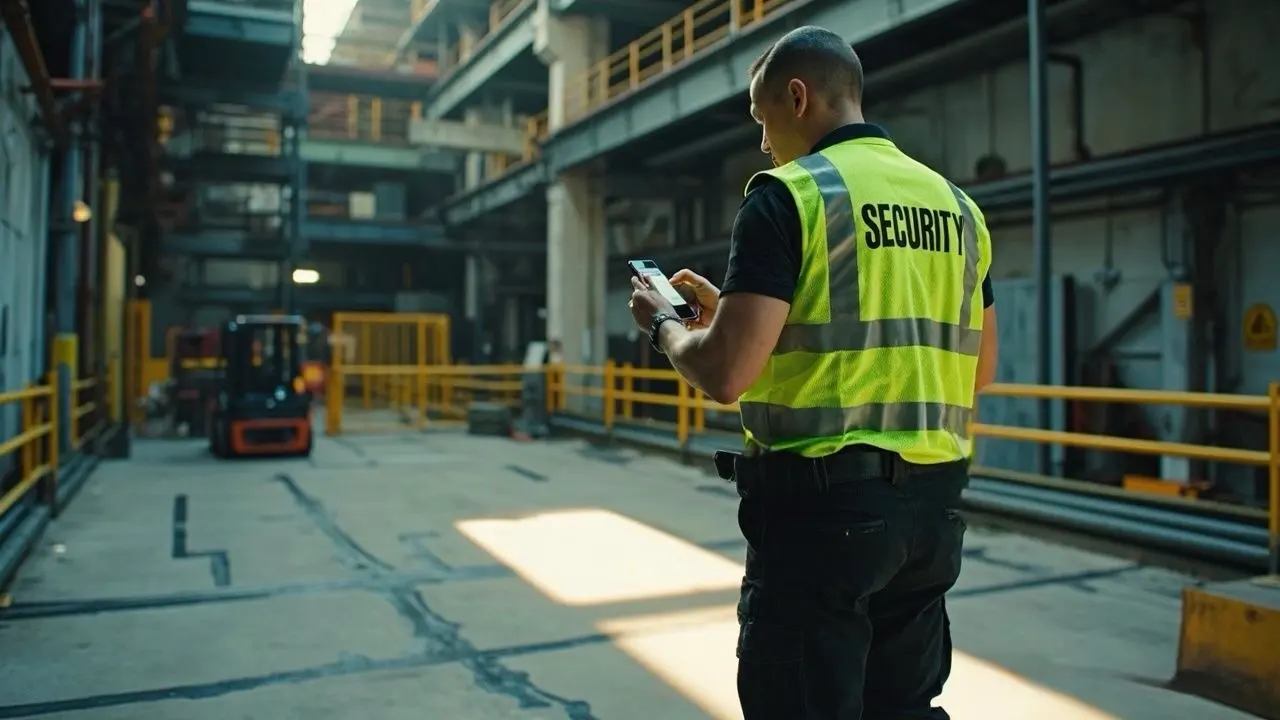
Digital Guard Tour is used on industrial sites where every missed patrol matters — from manufacturing plants to shipping ports and distribution centers.
Guards simply start their shift, pick a patrol, follow tasks on the phone and scan checkpoints. Supervisors see everything live in the web app.
No extra modules, no add-on fees. Every feature you need is built in.
Guards record unusual events with photos, description, timestamp, and GPS location. Supervisors review and approve — all included as standard.
Capture vehicles on entry with photos and key details, then find them quickly on exit using built-in search. Every movement stays linked to the site and shift.
Guards and supervisors stay in sync with in-app messaging. AI can search across incidents and vehicle logs in seconds to support deeper human analysis.
Give clients a real-time read-only view of patrol logs and incident records. Export audit-ready reports (XLS) anytime — without chasing paperwork.
Multi-location support, supervisor & admin roles, encrypted incident evidence, automatic audit logs. For organizations needing private infrastructure: self-hosted deployment available.
No proprietary scanner rollout required. Guards use the Android or iOS device they already own — less hardware waste than legacy tag-based setups.
This short video shows how guards start a shift, follow patrol plans and send incidents — and how supervisors see everything in the web dashboard without any extra hardware.
On iPhone and iPad, the video starts muted for autoplay. Tap the video and use the YouTube controls to enable sound.

Designed for self-service deployment: video help on every key screen and Trinity Agent AI available 24/7 to answer questions.
Powered by Trinity Guard SoftwareCommon questions from U.S. security company owners.