GPS Patrol System — Complete 2025–2026 Guide for Modern U.S. Security Teams
GPS patrol is the backbone of outdoor guard operations in the U.S. In this guide we explain how a GPS patrol system works, when it is the best choice, and how Digital Guard Tour combines GPS data with QR checkpoints and AI to give you real proof that every route actually happened.
1. What is a GPS patrol system?
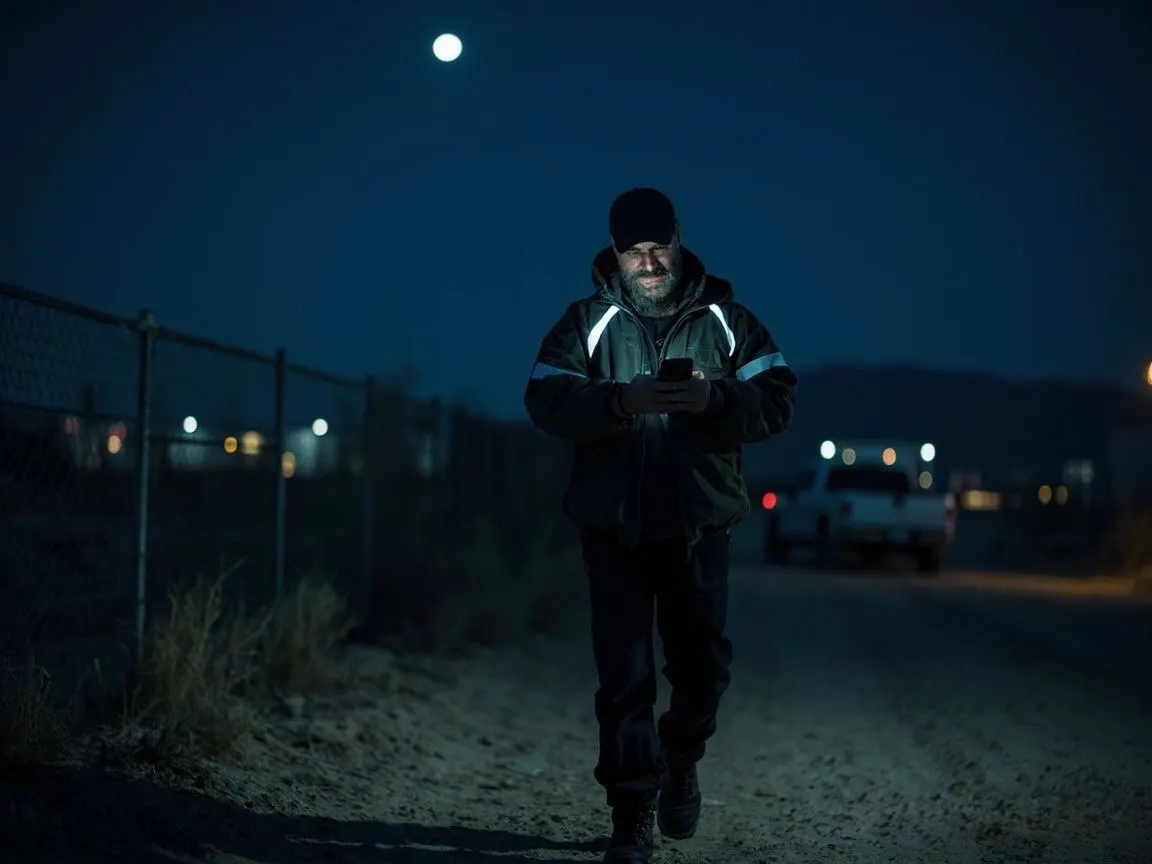
A guard tour patrol system uses the location data from your guards’ mobile phones to verify patrols in real time. Instead of hoping that a route was completed, supervisors see an actual track on a map, with timestamps and deviations clearly marked.
In Digital Guard Tour, GPS patrol is built into the mobile security guard app and the web-based Dispatch System. Guards run their patrols with a smartphone, while operators monitor live routes, missed areas and incidents from a single dashboard.
GPS patrol does not replace every other method. But for yards, logistics parks, ports and campuses across the U.S., it is the most efficient way to prove that guards really covered the ground they were supposed to.
2. How GPS patrol works inside Digital Guard Tour
Digital Guard Tour was designed from day one as a GPS patrol platform. A typical workflow looks like this:
- The guard logs in and starts the assigned patrol in the Digital Guard Tour app. This action activates the correct site, patrol route and tasks for that shift.
- GPS tracking begins only when the guard starts the patrol. From that moment, the app records movement and location automatically in the background — without requiring the guard to tap any “check in” buttons.
- Instead of geofences, Digital Guard Tour uses map-based GPS checkpoints. Each checkpoint has a specific task type (either “stay” or “touch”), proving that the guard actually reached key areas such as a rear fence line, loading ramp or remote parking lot.
- In the web dashboard, supervisors see live patrol progress, current position, completed/ missed checkpoints and delay alerts — all on one map-based view.
Because the GPS session is tied directly to the patrol the guard starts, supervisors get an accurate, verifiable movement history — while guards can focus on the job instead of operating hardware.
3. When GPS patrol is the best choice
GPS patrol is strongest when the question is: “Did we cover the area?” Typical U.S. use cases include:
- Logistics yards and truck terminals — long perimeter fences, parked trailers and remote corners that must be checked on foot.
- Industrial sites and rail spurs — large outdoor assets where a missed patrol can mean theft, vandalism or safety issues.
- Ports, marinas and waterfront facilities — variable layouts where fixed hardware is hard to deploy but GPS coverage is excellent.
- Mobile & vehicle patrols between multiple customer sites.
In these environments, a classic “scan-only” system cannot show whether guards actually walked the fence or just touched one or two points. GPS patrol fills this gap.
4. Limits of GPS patrol — and how to fix them
No technology is perfect. A professional GPS patrol system must be honest about its limits and provide ways to compensate.
- Indoor drift — GPS signals can be inaccurate inside buildings or underground parking structures. Digital Guard Tour solves this by combining GPS with QR checkpoints for precise indoor proof.
- Movement is not the same as inspection — a guard can walk or drive past a door without actually checking it. Digital Guard Tour uses AI-powered patrol verification that analyses QR scans in their real context (time, location and expected task). If something looks wrong — for example a task is never started, a sub-task is skipped or an incident is reported from an unusual position — the system immediately raises an alert for operators in the web dashboard.
- Battery life — poor implementations drain phones. Digital Guard Tour uses optimised GPS sampling so that guards can complete long night shifts without running flat.
The result is a GPS-based patrol system that is strong outdoors, honest about its limits, and designed to work together with QR codes and AI-driven anomaly detection.
5. GPS + QR + AI — the real-world patrol mix
In practice, the question today is not “GPS or QR?” but “What is the right mix for this site?”
Our recommended model for most U.S. security contracts:
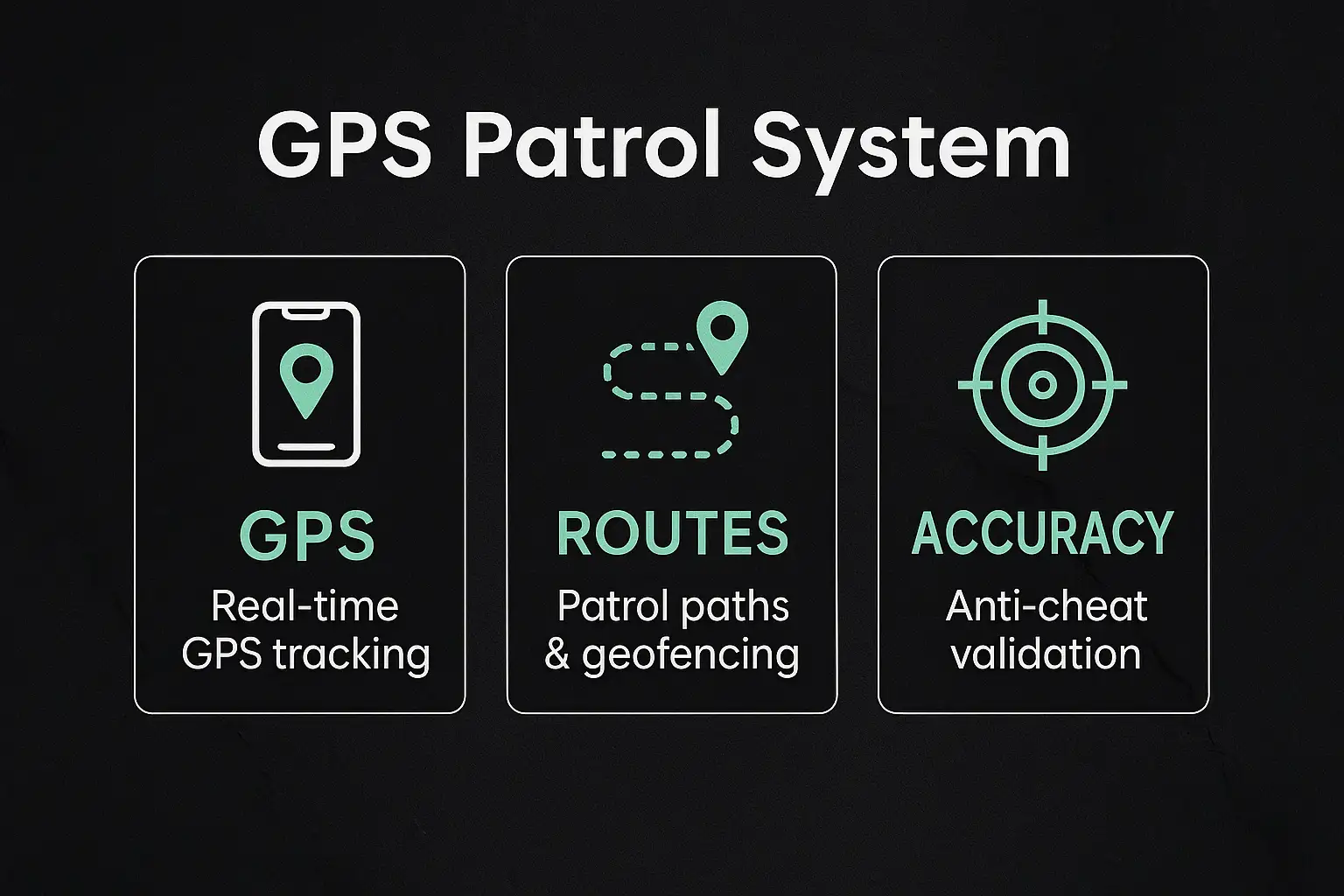
- GPS patrol for outdoor coverage and mobile routes.
- QR checkpoints for indoor accuracy around doors, racks, control rooms and critical equipment.
- AI patrol verification to connect movement and checkpoints into one story and flag anomalies automatically.
We cover this mix in more depth in our guide “QR vs GPS vs AI — Which Guard Tour Patrol Method Is Best in 2025–2026?”
Real GPS patrol scenarios covered by Digital Guard Tour
- Night-time perimeter rounds around remote warehouses and yards.
- Mixed vehicle & foot patrols between multiple distribution centres.
- GPS-backed incident reports with exact position and time for every photo.
- Audit-ready history for contract renewals and insurance investigations.
6. Setting up GPS patrol routes in Digital Guard Tour
Getting started with GPS patrol in Digital Guard Tour does not require any special hardware or NFC tags. A typical rollout looks like this:
- Create the site (object) in the web dashboard by using the “Add object” button under the Objects menu, and fill in the required details.
- Create patrol plans for day, evening and night shifts — including expected duration, frequency and critical areas that must be checked.
- Assign guards to each plan so the system knows who should be where and when.
- Define GPS checkpoints on the map for all areas that must be reached at least once per patrol. Each checkpoint can have a “stay” or “touch” task depending on what the guard needs to do there.
- Train guards on the mobile app — how to start a patrol, follow the route, complete tasks, report incidents and acknowledge alerts.
After this, the Dispatch System takes over the heavy lifting: it tracks movement, highlights late or missed patrols, and feeds the AI engine with clean, verifiable data.
7. What you can measure with a GPS patrol system
One of the biggest advantages of GPS-based guard tour systems is the ability to measure performance objectively. Digital Guard Tour gives supervisors and clients metrics such as:
- Completed vs. planned patrols per site, shift and guard.
- Patrol duration and pace, including “rushed” routes that may signal shortcuts.
- Time spent in high-risk zones such as back gates, docks or isolated parking areas.
- Response times from incident creation to first guard arrival.
These numbers help security companies justify their contracts, negotiate renewals and move away from “hours on site” towards complete guard tour system-level proof of service.
8. Who benefits most from GPS patrol?
GPS patrol is relevant for almost every security operation, but it is especially valuable for:
- Contract security companies that protect multiple logistics, industrial or retail sites and must prove coverage to demanding clients.
- Corporate security teams responsible for large campuses, data centres or manufacturing plants with critical outdoor infrastructure.
- Mobile patrol providers whose business model is based on visiting many locations in a single night.
For these organisations, a modern GPS patrol system like Digital Guard Tour is not just a “nice tool” — it is a competitive advantage.
FAQ — GPS Patrol in Modern Guard Tour Systems
Is GPS patrol enough on its own?
For large outdoor areas, GPS patrol gives excellent coverage. However, it cannot prove that a specific door, extinguisher or rack was inspected. For audit-ready proof, we recommend combining GPS patrol with QR checkpoints and AI patrol verification.
Do guards need special devices for Digital Guard Tour?
No. Digital Guard Tour runs on standard Android and iOS smartphones. There is no need for NFC batons or proprietary hardware, which keeps rollouts fast and affordable.
How accurate is GPS at night or in bad weather?
Modern smartphones deliver reliable GPS data in most outdoor conditions. The system also analyses routes over time, so occasional small drifts do not affect the overall proof of patrol.
Will GPS patrol drain the guard’s phone battery?
Digital Guard Tour uses optimised tracking to balance accuracy and battery life. In normal use, guards can complete a full shift without issues, as long as standard charging habits are followed.
Can clients see GPS patrol data directly?
Yes. With read-only access, clients can review completed patrols and incidents without changing anything in the system. This “view only” mode increases transparency while keeping control with the security provider.
Start using GPS patrol with Digital Guard Tour
If your guards are already walking the routes, GPS patrol is the simplest way to prove it. Digital Guard Tour gives you outdoor coverage with GPS, indoor precision with QR codes and AI to connect everything into one clear story for your clients.